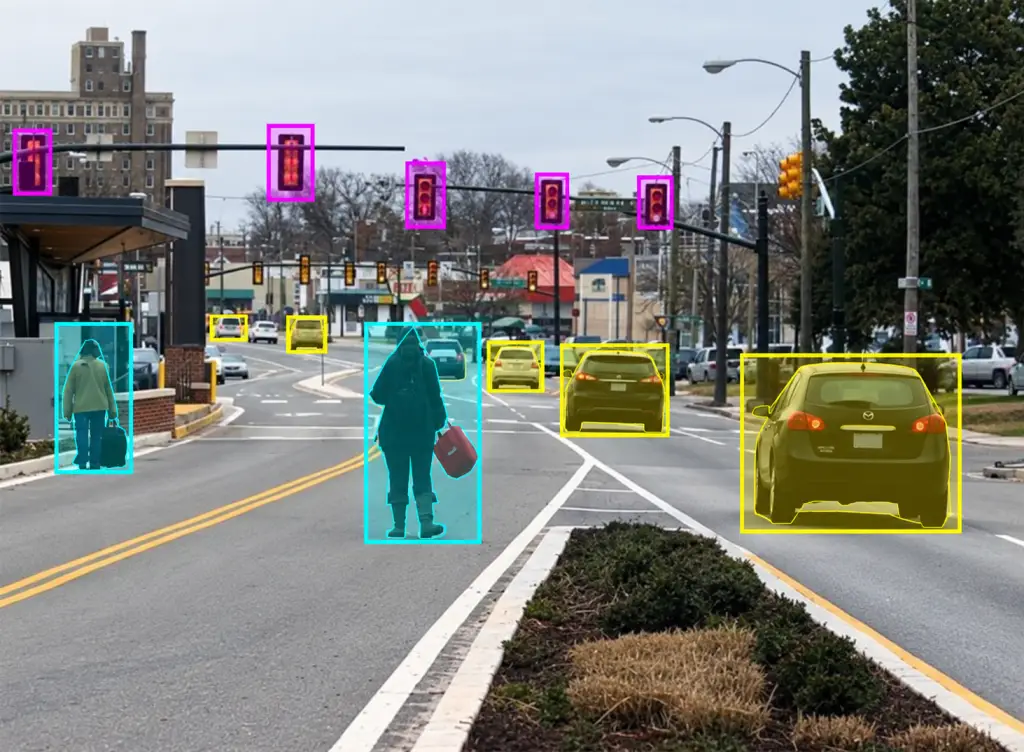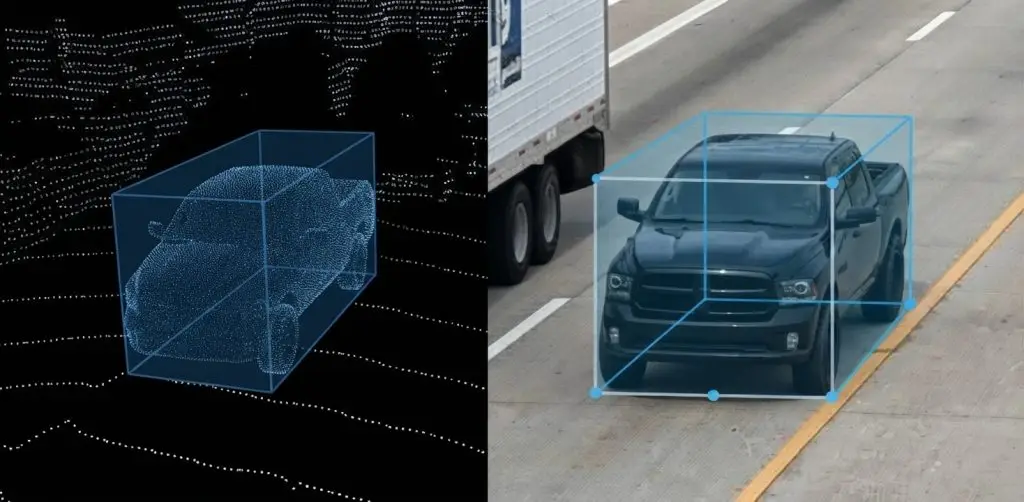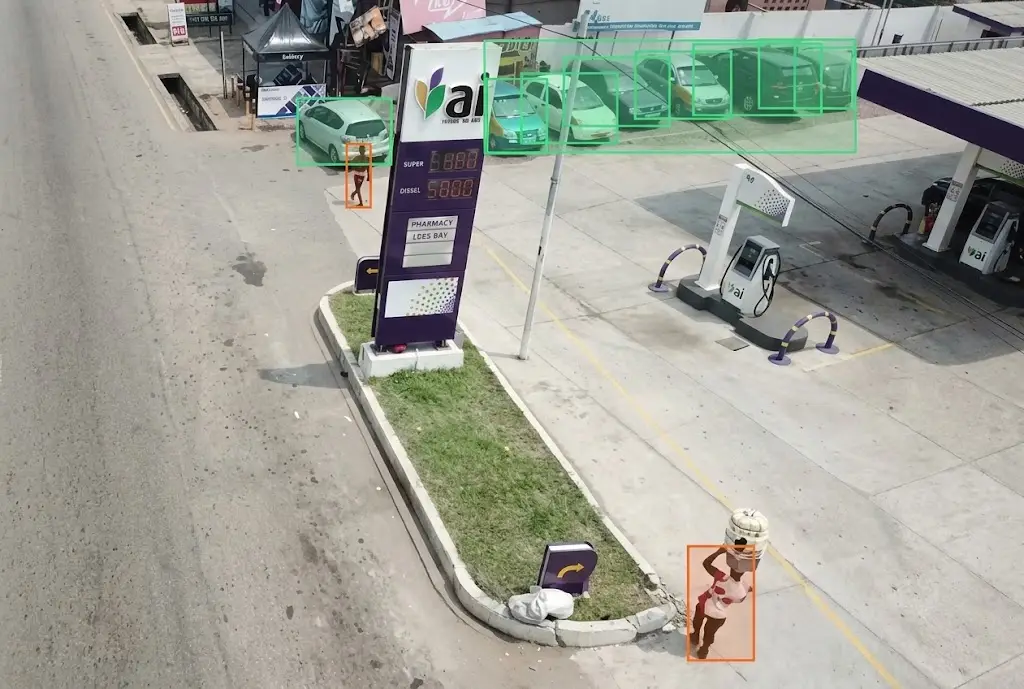

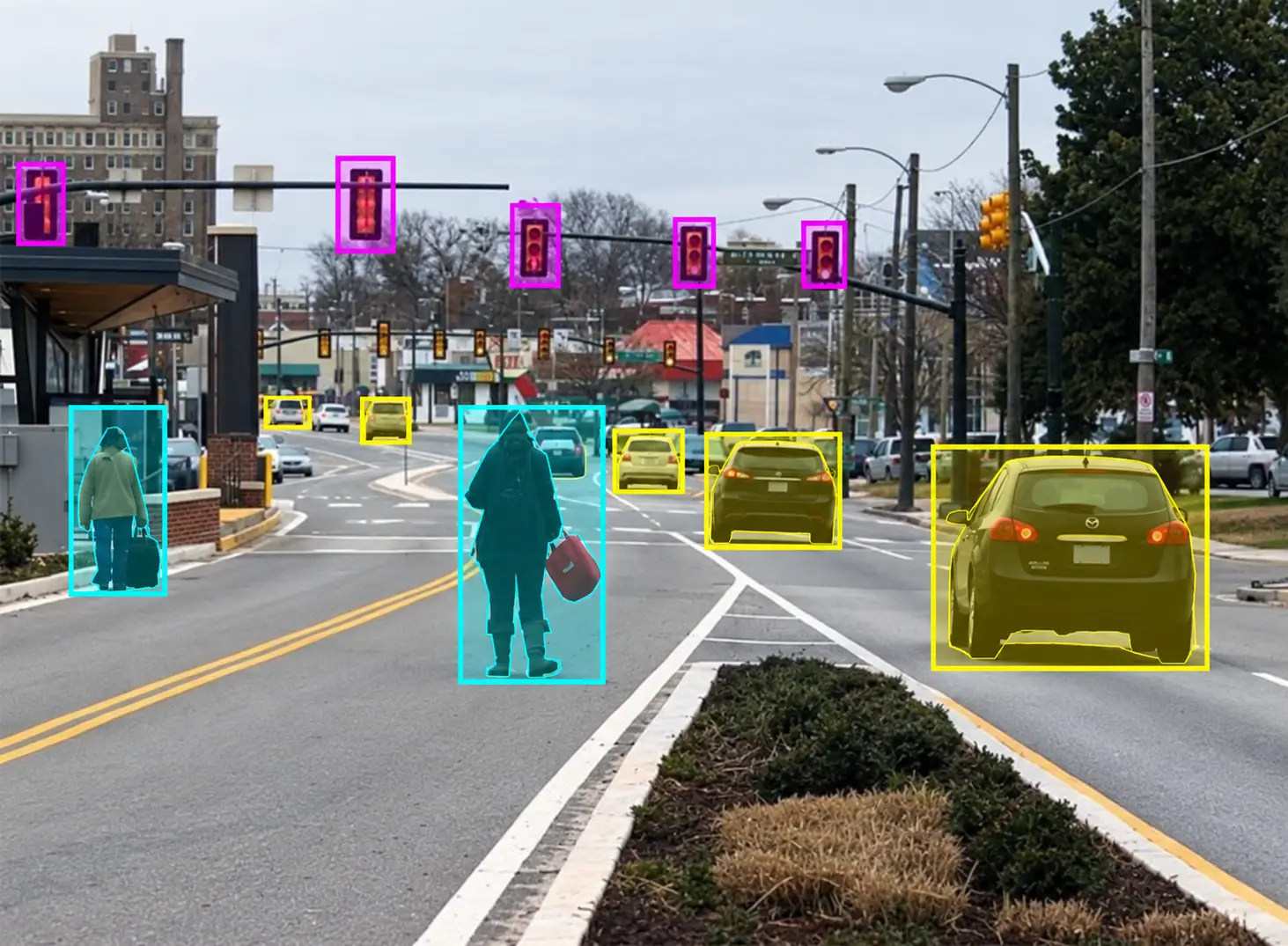
The rectangle is declared obsolete with every generation of models. It nonetheless goes on occupying the majority of projects, and the reasons for that persistence say more about the trade than about the format itself.
This article closes the course. It extends the article on moving to the cuboid.
What recent models change
Five developments touch annotation work in bounding box terms. An automatic proposal now reliable on common objects. A detection made possible from a plain textual description. A need for annotated examples very sharply reduced at the start. A segmentation obtained almost free from a single box. And an easier transfer from one domain to a neighbouring one. One important practical consequence follows. Those five developments all bear on the start and on common cases, which shortens the delay before a first useful result without changing the ceiling the project will eventually reach.What these models do not remove
Five tasks stay intact on a bounding box project. Drafting the reference proper to the client’s exact need. Adjudicating all the limiting cases the model ignores. Building a genuinely representative evaluation set. Annotating the rare classes never seen beforehand. And measuring what the result obtained is really worth. One important observation follows for a bounding box project. Those five tasks already constituted the most expensive share of a project, which explains why a gain announced on annotated volume rarely translates into a proportional fall in budget.What explains the format’s persistence
Five reasons keep the bounding box in use. Its production cost stays the lowest of all. Its verification stays immediate for any reviewer. It still suffices for a broad majority of real uses. Every richer geometry reduces to it without effort. And the processing chains already in place expect it. One practical consequence follows. The fourth reason weighs more than the others, a finer corpus always being able to produce rectangles whereas the reverse is impossible, which makes the rectangle the format everything converges towards rather than the one being abandoned.What the trade becomes
Five shifts affect annotation work in bounding box terms. The raw volume actually drawn falls on the easy cases. The share given to difficult cases rises correspondingly. Verification comes to replace part of the drawing. Scoping and measurement take a growing place. And the rare competence becomes identifying what is missing. One observation follows. Those five shifts make the remaining work harder on average, the easy share disappearing first, which raises the unit cost of what remains while reducing the total volume.What measuring an announced advance demands
Five comparisons establish the real value of a novelty. The performance obtained on the client’s reference, not on a public set. The number of examples needed to reach a given threshold. The performance on rare classes rather than on common ones. The behaviour on the real corpus’s difficult cases. And the human time effectively saved. One important observation follows for a bounding box project. The first comparison immediately separates the serious announcements from the rest, a result obtained on a public set saying roughly nothing about what the tool will produce on a reference of one’s own, which makes a demonstration on a few dozen of the client’s images more informative than any published figure.What the provider must prepare
Five investments keep their value whatever the tools do next. The capacity to write a reference that genuinely settles. A measurement arrangement genuinely able to see omission. The ability to spot what a given corpus does not cover. A control practice suited to verification work. And the habit of measuring any gain in hours rather than in volume produced. One important practical consequence follows for a bounding box project. Those five investments bear on judgement rather than on production capacity, which makes them insensitive to progress in the models and explains why they constitute an annotation provider’s only lasting asset.What detection by description changes
Four effects accompany a model guided by text. An entirely new class is requested without having been learnt. The wording used becomes a convention in its own right. Two nonetheless neighbouring descriptions produce different results. And the boundary between classes moves with the words chosen. One important observation follows for a bounding box project. The second effect reproduces exactly the reference problem, an ambiguous wording producing on a model what an ambiguous instruction produced on an operator, which shifts the question of drafting without ever removing it.What the client must check before believing it
Four points separate a solid demonstration from a promise. Is the gain measured on their own corpus. Is the evaluation set separated from the adjustment set. Are performances detailed class by class. And is human time counted rather than the number of objects. One important practical consequence follows for a bounding box project. The last point conditions every budgetary decision, a gain expressed in objects proposed never translating mechanically into hours saved, which makes that conversion more determining than the percentage announced.What throughput becomes with these tools
Four effects modify the working rhythm in bounding box work. Time per image falls markedly on well covered scenes. Time per difficult case stays unchanged, or even rises. The proportion of genuinely fast images varies with the domain. And the vigilance demanded rises since routine disappears. One important observation follows for a bounding box project. The last effect deserves attention and is often neglected, a day composed solely of difficult cases tiring far faster than one alternating routine drawing and adjudication, which echoes the findings of the chapter on dense scenes.What these tools do not change
Five findings from this course stay intact in bounding box work. A drawing convention is still decided in agreement with the client. An omitted object stays undetectable by any control of the deliverable. A global measurement still masks a failure on one population. A corpus that does not test the difficulty still reassures wrongly. And missing documentation still renders the corpus mute. One important practical consequence follows. Those five findings bear on scoping and on measurement rather than on execution, which explains why no progress in the models comes to touch them and why a badly scoped project fails today exactly as it failed ten years ago.Three errors proper to this period
Three defects accompany the adoption of recent tools in bounding box work. A budget built on a gain expressed in objects rather than in real hours. A control lightened on the sole grounds that the model looks good. And an adjustment conducted on the cases the tool already handled well. Those three defects are discovered after the budget commitment, they belong to how the gain is measured rather than to the tool itself, and their common point is to confuse a fall in volume with a fall in cost.What this course has established
Four findings run through the fifteen chapters. A convention left unwritten is always discovered far too late. A measurement left global masks failure on what really counts. What is prepared in calm conditions determines what production reaches. And the difficulty sits in the judgement rather than in the hand. One important observation follows for a bounding box project. The last finding explains all the others, work whose difficult share belongs to adjudication resisting automation far longer than repetitive work, which makes these fifteen chapters markedly more durable than the tools they mention.What this chapter concludes about the trade
Three traits characterise annotation as this course has described it. Value shifts towards scoping as well as towards measurement. The rarest competence becomes identifying what is missing. And the provider’s role now belongs to advice as much as to execution. One important observation follows for a bounding box project. Those three traits strengthen with every advance in the models, which makes the trajectory predictable even where its pace is not, and invites a provider to invest in judgement rather than in production capacity alone.What this chapter leaves open
Three subjects stay unresolved at the close of this course. Building references shared between the actors of one same field. Preserving quality measurements lastingly, beyond a single project. And comparing corpora produced under different conventions. One important observation follows for a bounding box project. Those three subjects belong to coordination between organisations rather than to technique, which makes them slower to advance than the models themselves and probably more determining for the value of the corpora already built.What this subject has that is particular
Four traits distinguish this question from the course’s others. It bears on announcements rather than on observations. It is revised with every generation of tools. It commits budgetary decisions before any verification. And it sets a provider’s caution against a client’s expectation. One important practical consequence follows for a bounding box project. The last trait places the provider in an uncomfortable position, a client who has read that a tool cuts costs fivefold receiving a more modest estimate badly, whereas that modesty rests on a measurement and the announcement on an extrapolation.What the first trial must establish
Four results justify a trial before any budget commitment. The performance obtained on the client’s own specific reference. The number of examples needed to reach the agreed threshold. The performance on classes the pretraining has never seen. And the human time observed on a batch comparable to an ordinary one. One important observation follows for a bounding box project. The last result settles matters more surely than all the others, a direct comparison between two equivalent batches handled with and without the tool giving a figure neither the provider nor the vendor can contest, which makes this trial more useful than a long technical discussion.What the contract must provide for here
Four clauses deserve writing on a project using these tools. The performance threshold from which the result is accepted. The division of work between automatic proposal and human rework. The fate of the annotated corpus should the model change mid-project. And the agreed measurement of the gain, expressed in time rather than volume. One important practical consequence follows for a bounding box project. The third clause is almost always neglected and becomes expensive, a model change decided along the way voiding part of the adjustment work already paid for, which justifies stating from the outset who bears that expense.What the corpus becomes in this context
Four shifts affect the building of a bounding box set. The total volume of examples needed falls appreciably. Selecting the examples becomes more determining than their number. Difficult cases must be deliberately over-represented in it. And the evaluation set keeps exactly the same requirement. One important observation follows for a bounding box project. The second shift changes the nature of the building work, a corpus now being judged on how much difficulty it holds rather than on its size, which makes identifying the missing cases more valuable than the capacity to produce volume.What this chapter suggests for what follows
Four developments are taking shape without yet being settled. A pretraining covering more specific business domains. Better performance on rare as well as small objects. A far more direct integration into annotation tools. And native handling of sequences rather than isolated images. One important observation follows for a bounding box project. Those four developments will reduce the automatable share of the work without touching scoping or measurement, which suggests the decisions described across this course will keep their value even once throughputs have changed.What this course leaves to those who extend it
Three questions go beyond the frame of these fifteen chapters. How to keep one same reference alive across several providers. How to preserve the memory of conventions beyond one team. And how to evaluate a corpus quite independently of who produced it. One important practical consequence follows for a bounding box project. Those three questions belong to organisation rather than to technique, which makes them accessible to whoever takes them seriously and explains why a provider attentive to these subjects lastingly stands apart from a better equipped competitor.What the provider brings here
Four contributions distinguish a tenable position on these developments. A measurement of the gain conducted on the client’s own corpus. An announcement expressed in real hours rather than in volume. A quality control maintained despite the automation. And a selection of examples directed towards the difficult cases. One important practical consequence follows. The second contribution appears to slow the adoption of a tool the client expects much from, whereas it avoids precisely the disappointment that will follow a budget built on a badly measured promise, which makes that caution more profitable in the long run than a shared enthusiasm.Approaching the format’s evolution
Five questions scope this evolution in bounding box work. Does the announced gain bear on the start alone. Often yes. Are the difficult cases concerned by it. Rarely. Does the scoping work disappear. Never. Does the measurement become less necessary. Quite the contrary. And is the rectangle actually disappearing. Nothing indicates it. Those five answers separate a real evolution from an announcement. Asking them before revising a budget avoids grounding a decision on a badly measured promise.The question that frames the use of a novelty
One question determines what a recent tool brings in bounding box work. Does the need resemble what the tool has already seen. A close need, common objects in ordinary scenes, draws a real benefit from pretraining and starts with few examples. A distant need, a particular business class or an atypical domain, recovers the requirements of an ordinary project and sometimes more. That question belongs to the need and not to the tool, it is asked before any budget commitment, and it separates a substantial saving from an expensive disappointment.Three decisions before revising a budget
Three decisions commit how a novelty is taken into account in bounding box work. Measuring the gain on the client’s corpus rather than on an announcement. Expressing that gain in hours saved and not in objects proposed. And checking that it bears on the project’s difficult cases too. Those three decisions cost a few days, they precede any tariff revision, and their absence leads to committing a budget on an advance that will not materialise.Three checks on an announced gain
Three controls qualify a novelty presented in bounding box work. The exact corpus on which the gain has been measured. The separation between the evaluation set and the adjustment set. And the precise unit in which the gain is expressed. Those three controls are each asked in one question, they require no competence in machine learning, and their absence indicates a promise whose scope nothing permits assessing.Three questions before an announcement
Three questions precede any conclusion about an announced advance. On which corpus exactly was the gain measured. Does it bear on common cases or on difficult ones as well. And is it expressed in objects proposed or in hours saved. Those three questions are asked in a minute, they require no technical competence, and their absence leads to revising a budget on the strength of a figure whose reach nobody knows.What this chapter teaches
One cross-cutting observation deserves closing this course. Automation shifts the difficulty without removing it. Three findings compose it. The gains bear on the start and not on the ceiling reached. The tasks that remain were already the most expensive. And the easy share disappears first, which raises the cost of the rest. That finding closes the fifteen chapters, the difficulty having sat from the outset in the judgement rather than in the hand.Why the cautious estimate is the commercial one
One point about how these conversations end belongs at the close of this course. A provider who tempers an announced gain expects to lose the deal. Three reasons follow in bounding box work. The client has read the announcement and arrives with a number in mind. A competitor confirming that number sounds more capable, not less honest. And the measured estimate always looks smaller than the published one. One important practical consequence follows for a bounding box provider. Tempering it anyway is what the relationship is built on, since the client who was promised a fivefold saving will remember that promise when the invoice reflects a twofold one, and the provider who quoted the measured figure is the one they call for the second corpus.Common mistakes
These failures recur often enough that naming them is usually enough to avoid them.- Building a budget on a gain announced in annotated volume.
- Believing a richer geometry makes the rectangle useless.
- Neglecting scoping on the grounds that the tools are improving.
- Lightening measurement when verification demands more of it.
- Confusing a reduction in volume with a reduction in cost.
- Expecting a model to handle the classes it has never seen.
- Investing in production capacity rather than in judgement.
- Assuming progress on common cases touches the difficult ones.
- Abandoning a format every chain still expects.
- Revising a rate before having measured the gain in hours.