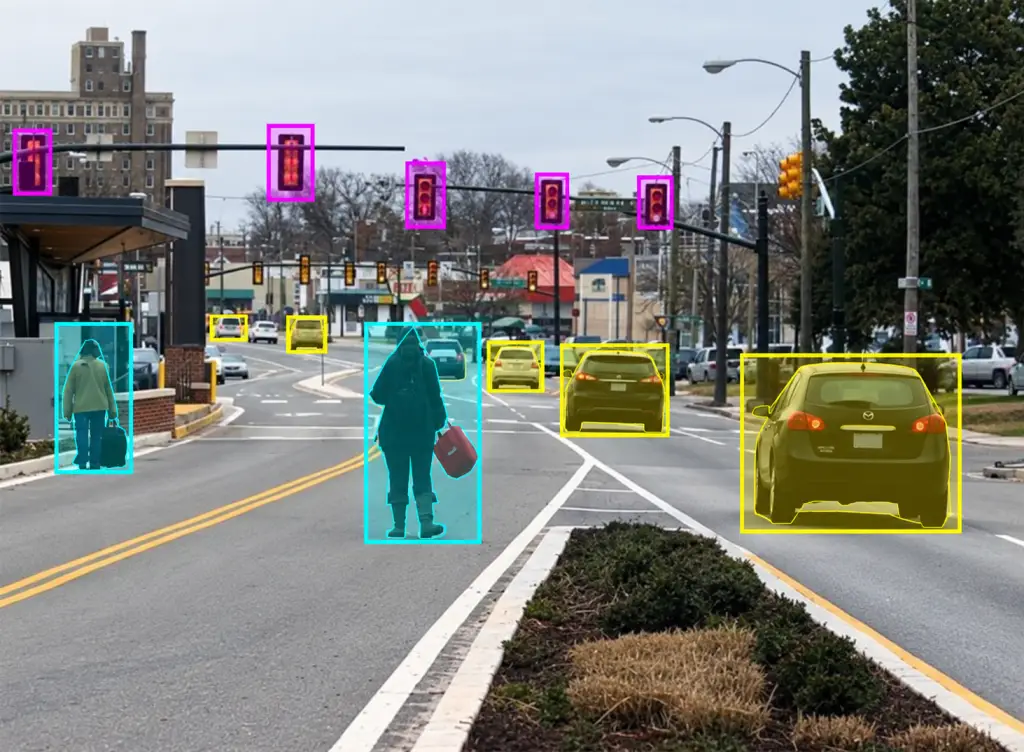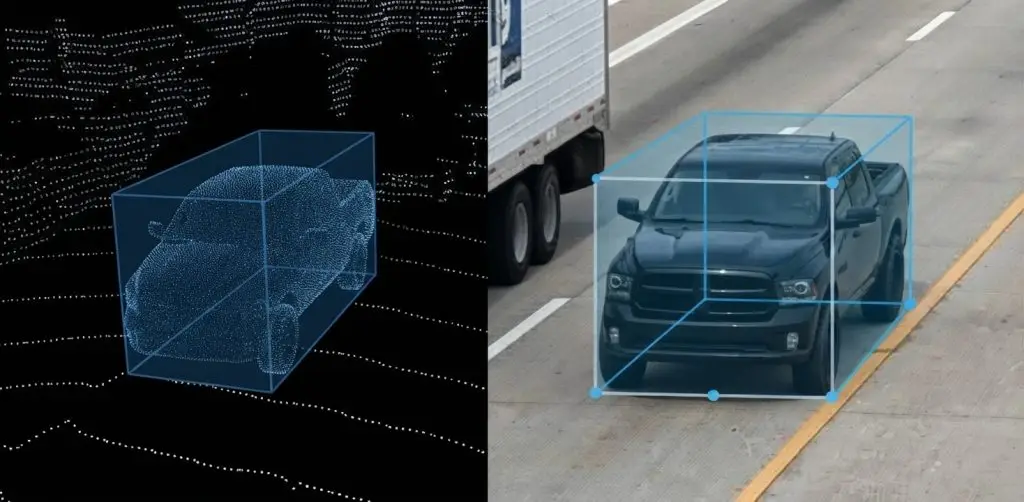

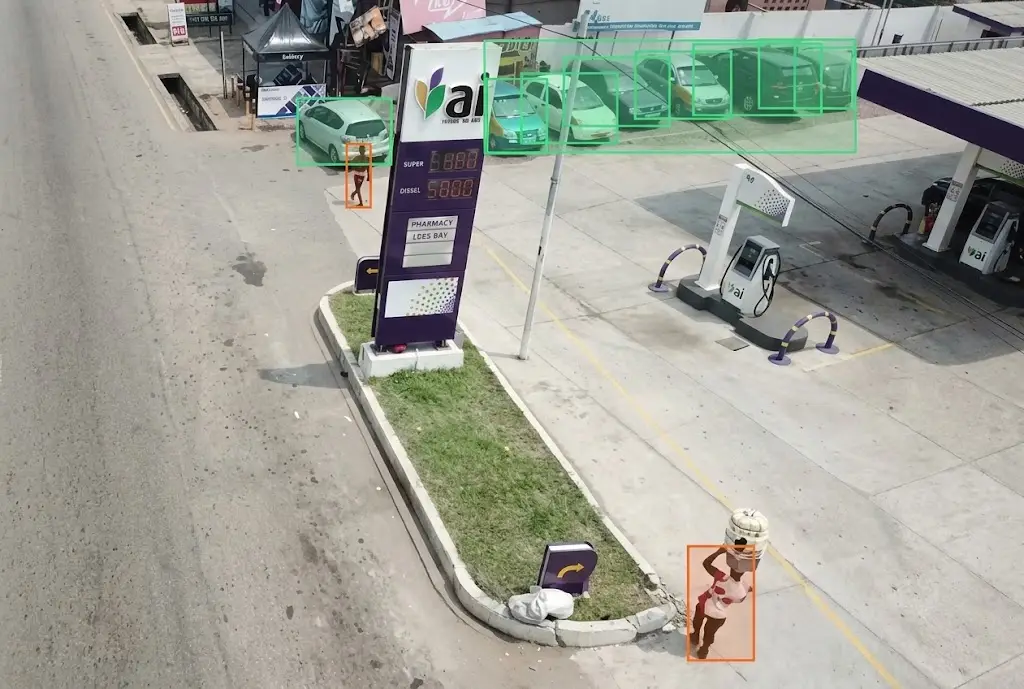
Having a model propose the boxes before an operator checks them looks like an obvious gain. The gain is real, it rarely falls where it is expected, and it comes with a defect the usual measurement does not see.This article sets out that practice. It extends the article on writing instructions.
What pre-annotation gains
Five benefits accompany an automatic proposal in bounding box work.The drawing disappears entirely on well contrasted, isolated objects.Throughput rises very sharply on the easiest images.Tightness becomes perfectly homogeneous across the whole corpus.The proposed count supplies a point of comparison at once.And the operator devotes their time to the cases that deserve it.One important practical consequence follows. Those five benefits all bear on the easy share of the work, the share that already cost least, which makes the real gain smaller than the percentage of automatically proposed objects suggests.What pre-annotation loses
Five unfavourable effects accompany pre-annotation in bounding box work.The operator checks what exists instead of going to look for what is missing.Objects the tool ignores remain almost always ignored.The tool’s convention silently imposes itself on the corpus.A plausible box is validated without ever being adjusted.And the homogeneity obtained looks a great deal like quality.One important observation follows for a bounding box project. The first effect is the gravest, a review of proposals turning a search task into a validation task, which concentrates omissions on the difficult objects the corpus was precisely meant to teach.What the tool’s convention imposes
Four gaps separate a proposal from a genuinely compliant drawing.A tightness following the model’s own definition and not the project’s.A treatment of masked objects that belongs to it alone.An implicit size threshold inherited from its own training.And a handling of adjoining objects that is its own.One practical consequence follows. Those four gaps are systematic by nature, a tool going wrong always in the same way where an operator varies, which places them at once in the most expensive category of defects.What choosing the tool commits
Five characteristics determine the usefulness of a proposal model.The precise domain on which it was trained.The classes it can propose as well as those it ignores.Its behaviour when facing small or else masked objects.The possibility of freely setting its confidence threshold.And the drawing convention it applies by default.One important practical consequence follows for a bounding box project. The fourth characteristic offers a lever that often goes unused, a lowered threshold producing more proposals to discard and fewer objects missed, which permits choosing which kind of error the tool will make rather than enduring its default setting.What the control must become here
Five bounding box arrangements suit a verification task.A fraction of the corpus annotated with no proposal at all.A comparison of the tightness obtained between the two modes.A count compared between the proposal and the final result.Particular attention paid to objects the tool never proposes.And regular tracking of the adjustment rate on the proposed boxes.One observation follows. The first arrangement is the only one that reveals the bias, free annotation across a few images showing the gap between the tool’s convention and the project’s, which turns an invisible defect into a measured gap.What the adjustment rate reveals
Four readings follow from the proportion of boxes actually modified.A very low rate signals a far too quick validation.A very high rate signals a tool visibly ill suited to the corpus.A rate stable over time signals perfectly regular work.And a rate falling at a session’s end signals fatigue.One important practical consequence follows for a bounding box project. The first reading surprises and deserves attention, an operator who corrects almost nothing producing work whose quality rests entirely on the tool, which makes an abnormally low adjustment rate more worrying than a high one.What the verification instruction must say
Five points separate a verification instruction from a drawing one.The obligation to cover the whole image in spite of the proposals.The tightness gaps that genuinely justify an adjustment.The classes on which the tool most habitually goes wrong.The conduct to adopt before a plainly doubtful proposal.And the reminder that no box does not mean no object.One important observation follows for a bounding box project. The last point deserves writing down in plain terms, a zone with no proposal being spontaneously read as a zone with no object, which makes that sentence more useful than all the others together on this kind of work.What measuring the real gain presupposes
Four comparisons establish the true contribution of a pre-annotation.The time spent per image, with and then without any proposal.The omission rate observed in the two working modes.The tightness effectively obtained on either side.And the total cost set against the number of correct objects alone.One important practical consequence follows for a bounding box project. The second comparison is almost always missing and sometimes reverses the conclusion, a real time gain coming with a rise in omission that cancels the value of the corpus produced, which makes the stopwatch alone insufficient for judging the method’s interest.Three errors proper to this method
Three bounding box defects belong to the use of a proposal.A gain announced in volume and yet never verified in hours.A control lightened on the sole grounds that the proposals look good.And a tool convention adopted without ever having been examined.Those three defects produce a corpus of very homogeneous appearance, they reveal themselves when the system fails on difficult cases, and their common point is to confuse regularity with correctness.What the operator must know here
Five kinds of knowledge separate a verification from a plain validation.The obligation to cover the image as though there were no proposals.The classes on which the tool most often goes wrong.The tightness gap that justifies reworking a box.The reflex of distrusting an image finished far too quickly.And the awareness that validating commits no less than drawing.One important practical consequence follows for a bounding box project. The last kind changes the relation to the work, an operator who feels responsible for the proposals they accept examining them quite differently from one charged with endorsing them, which belongs to how the task is presented as much as to the instruction itself.What the client must know here
Four pieces of information deserve giving rather than withholding.The very fact that a pre-annotation was used.The model used as well as the domain on which it was trained.The exact fraction of the corpus annotated with no proposal.And the gap effectively measured between the two working modes.One important observation follows for a bounding box project. The first piece is sometimes withheld and weakens the relationship, a client discovering afterwards that a tool produced part of the corpus then wondering about all the rest, which costs more than the conversation one wanted to avoid.What the improvement loop presupposes
Four conditions make a model retrained mid-project useful.A first batch annotated with no proposal at all, serving as a base.A retraining conducted on corrected rather than proposed data.An evaluation conducted before and then after on the same sample.And a check that the most difficult cases improve as well.One important observation follows for a bounding box project. The last condition avoids an illusion of progress, a model retrained on its own validated proposals confirming its biases instead of correcting them, which produces an improvement measured on the easy cases and none where the need lay.What this method changes about the project’s economics
Four effects modify the structure of the cost.Production time falls on the easy share of the work alone.The cost of control rises instead of falling.Setting up the tool is added to the start-up expenses.And the unit cost of the remaining objects rises appreciably.One important observation follows for a bounding box project. The second effect contradicts intuition and is neglected at costing, verification work demanding a more attentive control than drawing work, which leads some projects to observe a production gain entirely absorbed by the rise in control.What this subject has that is particular
Four traits distinguish this question from the course’s others.The gain is observed immediately and the defect much later.The deliverable becomes more regular while becoming more lacunary.The usual measurement records the improvement without seeing the loss.And the commercial argument almost always precedes the verification.One important practical consequence follows for a bounding box project. The last trait explains this chapter’s place, pre-annotation being sold before it is measured in most projects, which leaves the provider to temper a promise the market formulates in their stead.What organising the work can correct
Five arrangements limit the defects proper to verification.Alternating images with and without proposals throughout the session.Masking the proposals on a fraction of images drawn at random.Strictly limiting the length of pure verification sessions.Varying the operators assigned to the same batches.And periodically recalling the exhaustive sweep instruction.One important observation follows for a bounding box project. The second arrangement acts most effectively, an operator who does not know whether the image they are handling holds proposals keeping the habit of searching, which preserves the very gesture pre-annotation tends to erase.What the confidence threshold decides
Four effects accompany the setting of this parameter.A high threshold proposes only the most obvious objects.A low threshold proposes far more and multiplies false boxes.The first setting raises the risk of omission by the operator.And the second raises the time spent discarding proposals.One important practical consequence follows for a bounding box project. Those four effects make the setting depend on the defect the project fears, a low threshold suiting cases where omission costs dearly and a high one where throughput prevails, which makes this parameter a scoping decision rather than a technical setting.What pre-annotation does not replace
Four tasks stay intact whatever the tool’s quality.Drafting the reference as well as adjudicating limiting cases.Measuring omission through double annotation.Deliberate coverage of the most difficult situations.And the documentation finally handed over with the corpus.One important observation follows for a bounding box project. Those four tasks already constituted the most expensive share of a project, which explains why a method sharply reducing drawing time lightens the total budget only moderately.What this method presupposes of the provider
Four practices distinguish an honest use from an opportunistic one.Announcing the use of a tool rather than letting it be guessed.Measuring omission rather than settling for throughput.Refusing the method when the corpus targets what the tool ignores.And passing the real gain on to the price rather than keeping it.One important practical consequence follows. The third practice costs a deal from time to time, a provider explaining that pre-annotation would ill serve this particular project appearing to give up an advantage, whereas they are avoiding a corpus that will fail exactly where the client expected it to hold.What the provider brings here
Four contributions distinguish a well conducted bounding box pre-annotation.A fraction of the corpus annotated freely so as to serve as a reference.A verification instruction written and quite distinct from the rest.A tracking of the adjustment rate conducted per operator.And a gain announced in real hours rather than in proposed objects.One important practical consequence follows. The last contribution reduces the announcement effect and protects the relationship, a provider promising a threefold cost reduction on the strength of the proposal rate putting themselves in an untenable position, which makes a cautious announcement sounder than a spectacular argument.Approaching a project with pre-annotation
Five questions scope such a bounding box project.Is the tool’s convention known. It will impose itself.Is omission controlled. It worsens here.Is a fraction annotated freely. That is the only reference.Is the adjustment rate tracked. It reveals the vigilance.And is the gain measured in hours. Not in objects proposed.Those five answers determine the value of the pre-annotation. Asking them before production avoids an apparent gain paid for with a lasting bias.The question that frames the use of a proposal
One question determines the interest of pre-annotation in bounding box work.Must the corpus teach what the tool already knows or what it ignores.What it already knows, common objects in ordinary scenes, is produced quickly and well with an automatic proposal.What it ignores, difficult cases or a new domain, is produced badly with a proposal since the tool misses precisely those objects.That question belongs to the corpus’s reason for being, it is asked before choosing the method, and it explains why pre-annotation serves least where the need is greatest.Three decisions before using a proposal
Three decisions commit a pre-annotation in bounding box work.Annotating a fraction of the corpus with no proposal, by way of reference.Writing a verification instruction quite distinct from the drawing one.And measuring the gain in real hours rather than in objects proposed.Those three decisions cost one day, they precede production, and their absence produces an apparent gain paid for with a bias nothing will signal.Three checks on a pre-annotated corpus
Three controls qualify assisted bounding box work.The existence of a fraction of the corpus annotated with no proposal.The adjustment rate measured on the proposed boxes.And the comparison of the omission rate recorded between the two modes.Those three controls are each asked in one question, they require no technical competence, and their absence indicates a corpus carrying the convention of a tool nobody has examined.Three questions before accepting this method
Three questions precede adopting a pre-annotation.On which precise domain was the proposed model trained.What fraction of the corpus will be annotated with no proposal.And does the announced gain bear on real hours or on objects.Those three questions are asked before the start, they require no technical competence, and their absence leads to accepting a method whose real effect nobody will measure.What this chapter teaches
One cross-cutting observation deserves closing this examination.Automatic help reinforces what the corpus already knew how to do.Three findings compose it.The benefits all bear on the share of the work that cost least.A review of proposals turns a search into a validation.And a tool goes wrong always in the same way where an operator varies.That finding extends the preceding chapters, automation shifting the defect rather than removing it.What this chapter shares with the previous ones
Three findings recur from the start of this course.Automatic help reinforces what the corpus already knew how to do.The homogeneity of a deliverable never guarantees its correctness.And the most expensive defect stays the one that cannot be seen.One important practical consequence follows for a bounding box project. Those three findings meet here in a single phenomenon, pre-annotation simultaneously producing a corpus that is more regular, more reassuring and more lacunary, which makes it the case where vigilance must be strongest at the very moment everything appears to be going best.What this chapter leaves to the next
The rectangle here reaches the limit of what a flat image permits.Three questions stay open in bounding box work.What a box loses as soon as depth matters.What a cuboid adds as work and as convention.And why the third dimension changes the nature of the control.Those three questions belong to moving to the cuboid, which constitutes the subject of the following chapter.Why the announced saving deserves tempering
One point about how this method is sold belongs at the close.Clients now expect pre-annotation to cut the price substantially.Three reasons follow in bounding box work.The proposal rate is easy to quote and sounds like a saving.Competitors quote against that figure rather than against hours.And nobody checks the claim once the corpus is delivered.One important practical consequence follows for a bounding box provider. Quoting the measured hour saving instead is the only position that survives the project, since a provider who promised a proportional cut must either absorb the difference or deliver a corpus whose omissions pay for it, and the client discovers which one only when the system starts failing.Common mistakes
These failures recur often enough that naming them is usually enough to avoid them.- Measuring the gain in objects proposed rather than in hours saved.
- Neglecting omission control on verification work.
- Ignoring the convention proper to the tool used.
- Taking comfort in a homogeneity produced by the machine.
- Omitting to annotate a fraction of the corpus with no proposal.
- Reading a low adjustment rate as a sign of quality.
- Lightening the control because the proposals look good.
- Using a tool trained on a different domain.
- Letting the operator validate with no verification instruction.
- Assuming a volume gain translates into a budget gain.