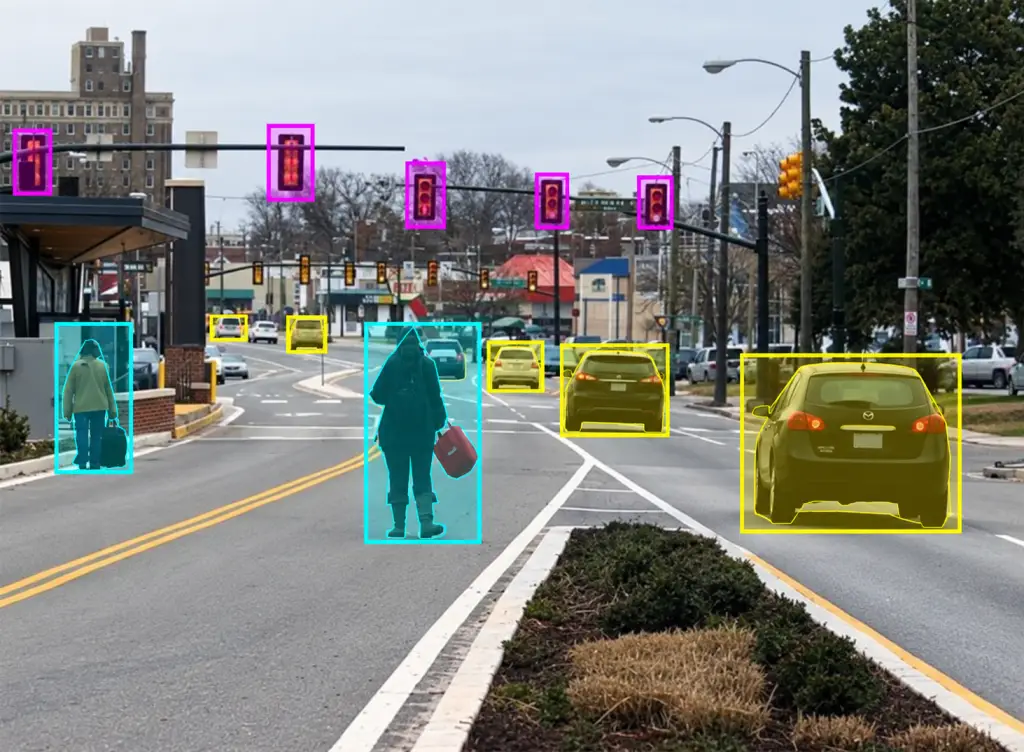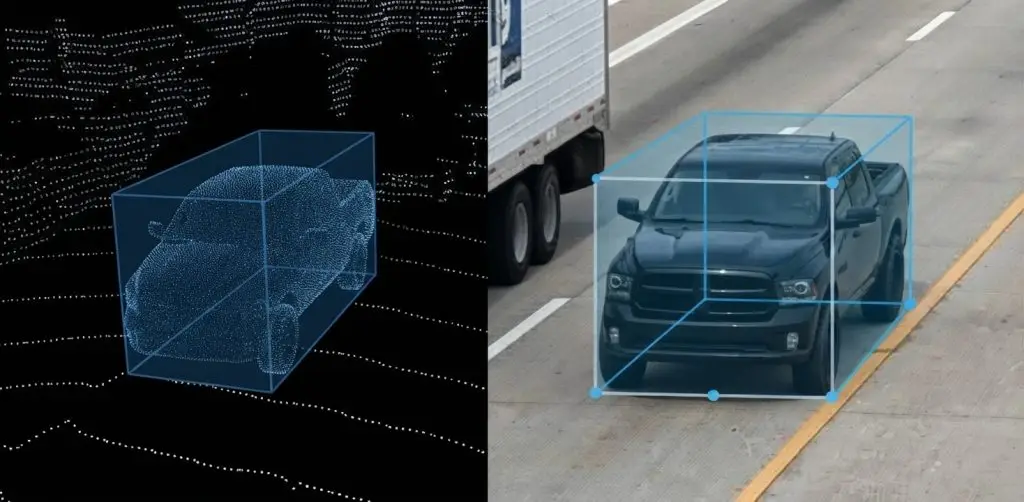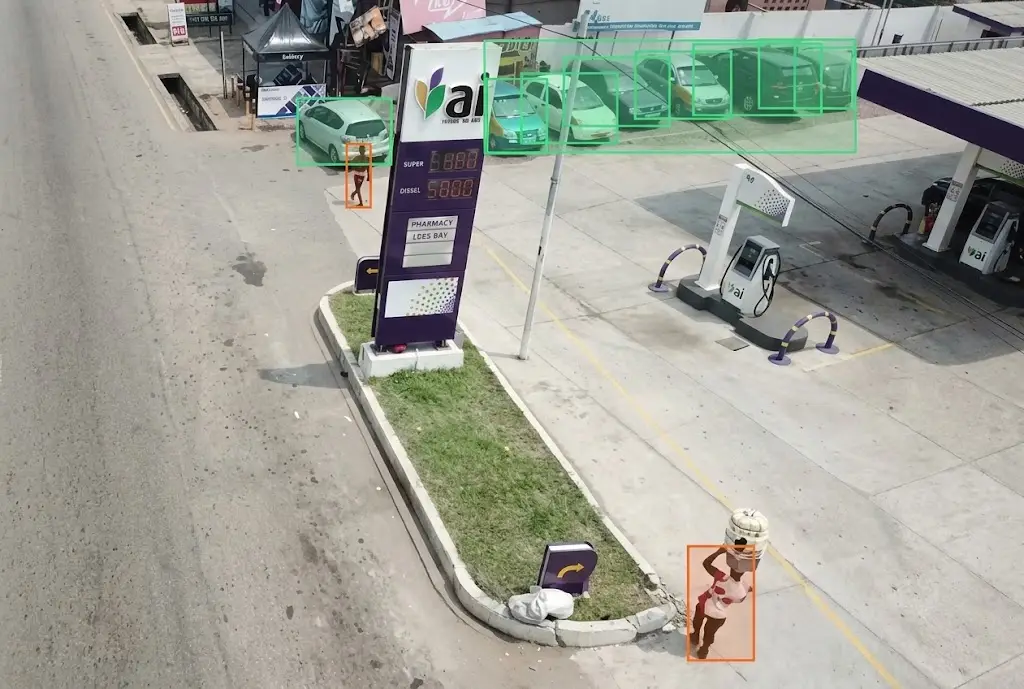

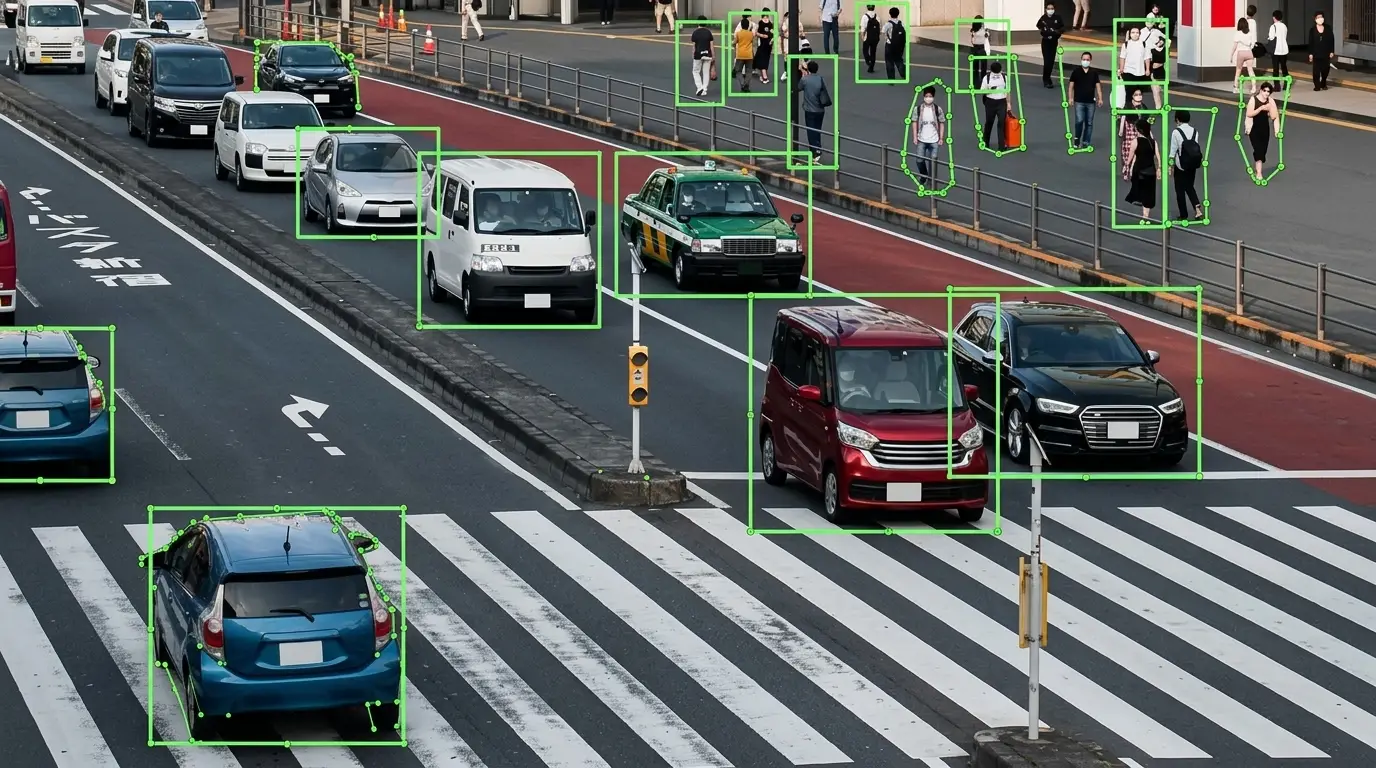
Two annotators looking at the same object draw two different rectangles. The gap rarely comes from carelessness, almost always from the fact that nobody defined how tightly the rectangle was meant to enclose.
This article sets out those rules. It extends the article on choosing the geometry.
What tightness means
Five tightness conventions occur in bounding box work. The rectangle placed in exact contact with the object’s outermost pixels. The rectangle leaving a constant margin all around the object. The rectangle enclosing the object as well as its own shadow. The rectangle following the perceived rather than the measured silhouette. And the rectangle drawn entirely by eye, with no explicit rule at all. One important practical consequence follows. The last convention is by far the most widespread, a project that fixes nothing letting every operator adopt their own rule, which produces a corpus whose dispersion comes from the scoping rather than from the care taken.What tightness changes about the result
Four effects follow from the degree of tightness adopted in bounding box work. The proportion of background included in each of the examples. The consistency of the dimensions attributed to one same object. The comparability of the measurements obtained between two annotations. And the difficulty of the control conducted by a reviewer. One important observation follows for a bounding box project. The second effect matters more than the first, a variable tightness making one same object look now larger and now smaller depending on the operator, which introduces a variation nothing in the scene justifies.What makes the edge hard to locate
Five situations blur the object’s exact limit. An outline made blurry by motion or by focus. A cast shadow directly attached to the object. A reflection extending the object onto a neighbouring surface. An accessory whose belonging to the object is not settled. And too soft a transition between the object and its support. One practical consequence follows. Those five situations are in no way resolved by precision of hand, the limit being undecidable on the image, which calls for a rule rather than for additional effort.What a margin costs or returns
Four arguments oppose each other on this point in bounding box work. A zero margin assuredly gives the cleanest example. A zero margin sometimes comes to clip the object itself. A constant margin on the other hand makes tightness reproducible. And a constant margin adds background across all the examples. One observation follows. The second argument often settles the debate, a rectangle drawn too tight cutting into a poorly perceived edge, which makes a minimal margin preferable to maximum tightness pursued at all costs.What tightness the final use demands
Five uses call for different requirements. Plain detection tolerates relatively approximate tightness. Counting is satisfied by any convention applied uniformly. Extracting a zone prefers a margin to strict contact. Estimating a dimension demands tightness both strict and reproducible. And object tracking calls above all for stability from one frame to the next. One important observation follows for a bounding box project. The last use imposes a particular requirement, tightness varying even slightly from one frame to the next producing an object that seems to pulse although it is not moving, which disturbs tracking far more than loose but constant tightness.What the rule must specify
Six points make a tightness instruction genuinely applicable. The principle finally adopted, exact contact or constant margin. The exact value of that margin where one exists. The fate given to the object’s own shadow as well as to reflections. The treatment given to attached accessories. The conduct to adopt when facing a blurred outline. And the gap tolerated between two annotations of the same object. One important practical consequence follows for a bounding box project. The last point is almost always missing and determines the rest, a reference demanding perfect tightness without ever saying what counts as an acceptable gap producing endless rework over insignificant differences.What measuring tightness reveals
Four indicators describe the reproducibility of a drawing. The average gap observed between two annotations of the same object. The dispersion of that gap across each of the operators. The systematic bias of an operator towards loose or towards tight. And the variation of that gap with the size of the object. One important practical consequence follows. The third indicator usefully directs the correction, an operator biased in a constant way being corrected by a simple instruction whereas a dispersed operator with no bias belongs to a problem of method, which separates two remedies nothing brings together.What the object’s size changes
Four effects accompany a reduction in size. A gap of two pixels becomes a considerable share of the object. The outline then occupies a growing fraction of the area. The zoom become necessary appreciably slows the work. And dispersion between operators rises mechanically. One important observation follows for a bounding box project. The last effect requires breaking every measurement down by size, a global agreement rate mixing the large and the small objects masking considerable dispersion on the latter, which leads to wrongly concluding that the instruction is being correctly applied.What throughput loses to strict tightness
Four effects accompany a high tightness requirement. The zoom becomes necessary on a growing share of the objects. Each box demands one or two adjustments after its first drawing. Hesitation before limiting cases appreciably slows the pace. And the rework following the control adds to the initial time. One important practical consequence follows for a bounding box project. The second effect weighs most on the total, an adjustment looking negligible at the scale of one box and representing a considerable share of the total time across tens of thousands of objects, which justifies demanding strict tightness only where the dimensions genuinely matter.What controlling tightness presupposes
Four arrangements genuinely permit verifying a drawing instruction. A double annotation conducted on a restricted fraction of the corpus. A superimposed display of the two drawings permitting comparison. A tracking of the bias proper to each operator through the project. And a targeted rework of only those gaps exceeding the agreed threshold. One important observation follows for a bounding box project. The last arrangement protects production as much as quality, a rework triggered by the slightest visible gap consuming considerable time for a gain close to nothing, which makes the threshold as useful to the budget as to the corpus.What pre-annotation changes about tightness
Four effects follow from using an automatic proposal. Tightness becomes perfectly homogeneous across the whole corpus. That homogeneity follows the tool’s convention and not the project’s. The operator very rarely adjusts a box that already looks acceptable. And the bias introduced is noticed only by comparing with free annotation. One important observation follows for a bounding box project. The last effect deserves an explicit control, a fraction of the corpus annotated with no proposal at all revealing the exact gap between the two conventions, which turns an invisible bias into a measured gap one can decide to accept or to correct.What the first batch must establish
Four results justify a trial batch before production. The average gap observed between two annotations of the same object. The full list of cases where the edge proved undecidable. The bias proper to each of the operators actually mobilised. And the effect of the object’s size on the dispersion observed. One important practical consequence follows for a bounding box project. The second result directly produces the final instruction, each undecidable case met calling for a rule that did not yet exist and that the first batch brings to light, which makes this trial more useful for drafting the reference than for measuring throughput.Three errors proper to tightness
Three bounding box defects belong to this rule alone. Tightness demanded with no written definition at all of what it means. An absent gap threshold, turning every difference into rework. And an operator bias never measured, and therefore never corrected. Those three defects never produce any plainly wrong box, they reveal themselves by comparing two annotations of the same object, and their common point is to manufacture a dispersion the corpus will attribute to the real world.What the client must settle here
Four decisions belong to the client rather than to the provider. The belonging of accessories to the object in their own field. The fate of the cast shadow, proper to their shooting conditions. The tightness requirement justified by the use they genuinely foresee. And the maximum gap they accept between two annotations of the same object. One important observation follows for a bounding box project. The first decision belongs to the client because it depends on the trade, an accessory belonging to the object in one given use and not in another, which makes any general answer inapplicable and any answer from the provider arbitrary.What revising an instruction imposes
Four situations force reworking a tightness rule. A type of object whose edge proves systematically too ambiguous. A use specified well after production has started. A gap between operators the current instruction does not explain. And a change of image source modifying how outlines render. One important observation follows for a bounding box project. The last situation surprises and occurs regularly, a batch of images sharper or else blurrier than the previous ones shifting the perceived limit of the object, which produces a drift in tightness without any operator having changed how they work.What training transmits here
Four gains clearly distinguish an operator trained in this rule. The hand movement reaching the wanted tightness without the slightest hesitation. Immediate recognition of the cases the instruction has already settled. Awareness of their own bias towards loose or towards tight. And the reflex of flagging a new case rather than absorbing it alone. One important practical consequence follows for a bounding box project. The third gain is obtained only by comparison, an operator never perceiving by themselves that they consistently draw tighter than another, which makes a cross exercise at the project’s start more formative than any explanation.What the working tool changes here
Five interface functions bear directly on the reproducibility of the drawing. A genuinely fast zoom, without which tightness is judged from too far. An adjustment of the edges to the pixel after the initial drawing. A display of the box’s dimensions during the drawing itself. An aid snapping to well contrasted edges. And a permanent visual reminder of the convention adopted. One important observation follows for a bounding box project. The fourth function produces an ambiguous effect, a snapping aid homogenising tightness between the operators while imposing its own definition of the edge, which improves reproducibility without guaranteeing conformity to the written instruction.What the corpus must cover here
Five situations deserve a quite explicit place in the corpus. Sharply defined objects, serving as a tightness reference. Deliberately blurred outlines, where the rule takes on its full meaning. Objects accompanied by a strongly marked cast shadow. Objects fitted with ambiguous accessories. And objects of very small size on screen. One important observation follows for a bounding box project. The second situation is most often missing, a corpus composed solely of well outlined objects never testing the tightness rule, which lets everyone believe it works until the day the real images arrive.What this subject has that is particular commercially
Four traits distinguish this question from the course’s others. It is settled in a single hour and yet weighs on the whole corpus. It costs almost nothing to handle and a great deal to ignore. It is then recovered by no later control at all. And the client themselves almost never thinks to raise it. One important practical consequence follows. The last trait gives the provider a role they rarely take up, the question of tightness belonging to the annotation trade itself rather than to the client’s, which makes its absence from a brief normal and its absence from the provider’s response markedly less so.What the provider brings here
Four contributions distinguish a serious engagement in bounding box work. A tightness rule written and then illustrated with examples. A tolerated gap threshold fixed well before production. A measurement of the bias proper to each of the operators. And visual examples of the limiting cases rather than a description. One important practical consequence follows. The last contribution weighs more than the other three together, a sentence describing tightness lending itself to several readings where an annotated image admits only one, which makes a few visual examples more effective than several pages of instruction.Approaching the question of tightness
Five questions scope tightness on a bounding box project. Which principle applies. Contact or margin, a choice must be made. What about the shadow. It either extends the object or it does not. How to handle a blurred outline. A rule beats extra effort. What gap is acceptable. With no threshold, everything becomes rework. And will the dimensions be used. That changes the requirement. Those five answers determine the very reproducibility of the drawing. Asking them before production avoids a corpus whose dispersion comes from the instruction alone.The question that frames the instruction
One question determines the tightness requirement in bounding box work. Will the box’s dimensions be used, or only its position. Only the position, to detect or to locate, tolerates approximate tightness provided it stays constant from one operator to another. The dimensions used, to estimate a size or follow an evolution, demand strict tightness and a written rule nothing replaces. That question belongs to the use and not to the care of the operators, it is asked before the first image, and it separates a one-page instruction from a reference that will have to be detailed.Three decisions before producing
Three decisions commit tightness on a bounding box project. Choosing between exact contact and constant margin, then writing it down. Fixing the fate of the cast shadow as well as of attached accessories. And settling the precise gap tolerated between two annotations of the same object. Those three decisions cost only half an hour, they precede the very first image, and their absence produces a dispersion nobody will be able to attribute.Three checks on a tightness instruction
Three checks qualify a drawing rule in bounding box work. The principle adopted, written down rather than left implied. The fate given to the cast shadow and to accessories. And the tolerated gap, quantified rather than left to judgement. Those three checks are each asked in one single question, they require no particular technical competence, and their absence indicates an instruction every operator will complete in their own way.What this chapter teaches
One cross-cutting observation deserves closing this examination. A drawing is reproducible only if its rule is written down. Three findings compose it. A project that fixes nothing lets every operator adopt their own rule. A limit undecidable on the image calls for a convention and not for effort. And variable tightness makes one same object look larger or smaller. That finding extends the preceding chapters, reproducibility replacing precision there as the criterion of quality.What this chapter shares with the previous ones
Three findings recur from the start of this course. An unwritten convention is replaced by as many conventions as there are operators. A visual example transmits a rule far better than a long paragraph. And a scoping defect reads as a property of the real world. One important practical consequence follows for a bounding box project. The last finding explains this geometry’s particular difficulty, a corpus that is nonetheless inconsistent staying perfectly plausible to the eye, which deprives the project of the alarm signal finer geometries provide.What this chapter leaves to the next
A well drawn rectangle stays unsuitable on a tilted object. Three questions stay open in bounding box work. What an axis-aligned box loses on an object set diagonally. What an oriented box brings and what it costs. And how to describe an angle without introducing fresh ambiguity. Those three questions belong to oriented boxes, which constitute the subject of the following chapter.Why raising this unprompted is worth the awkwardness
One point about who brings this up belongs at the close of this chapter. Raising tightness before the client does can look like overcomplicating. Three reasons follow in bounding box work. The client asked for boxes and considers the task already specified. The question sounds pedantic until its consequences are explained. And a competitor who stays quiet appears easier to work with. One important practical consequence follows for a bounding box provider. Raising it anyway is the only version that ends well, since the dispersion it prevents is invisible in the delivered files and surfaces months later as a model that behaves oddly, and by then nobody connects the behaviour to a conversation that never happened at the start.Common mistakes
These failures recur often enough that naming them is usually enough to avoid them.- Demanding perfect tightness without defining what tightness means.
- Omitting the acceptable gap threshold between two annotations.
- Leaving the fate of the cast shadow to each person’s judgement.
- Handling a blurred outline by effort rather than by a rule.
- Confusing maximum tightness with the quality of the corpus.
- Clipping the object while trying to hug it as closely as possible.
- Changing tightness convention mid-project.
- Measuring quality without measuring dispersion between operators.
- Reworking annotations over insignificant gaps.
- Neglecting the effect of tightness on the dimensions used.