
A study of the investment landscape states the shift concisely: the Earth observation sector is transitioning from a government-led utility to a commercially competitive, venture-backed industry with multiple paths to scale and exit.
That transition explains the population of companies this article describes, their financing structures and what the configuration implies for a data provider. It extends the article on near real-time Earth observation.
The transition the Earth observation sector is undergoing
Understanding it matters considerably more than any list of company names.
The sector was for decades an institutional undertaking. Agencies designed missions, funded them and distributed their products, and commercial activity sat at the margins.
The same study notes the sector’s speed of transition is ultimately a function of commercial demand, and that end clients have begun pricing in technology-led capability.
Three consequences follow. Companies now build products for buyers rather than deliverables for programmes, which changes what they need. Their timelines are those of a market rather than of a mission, which shortens decision cycles. And their survival depends on revenue rather than on renewal, which makes them demanding on what they buy.
The two economic models in Earth observation
One distinction separates the sector into two populations with very different economics.
A funding analysis notes that Earth observation software companies can scale with less capital than constellation operators, several of them showing strong funding without owning large satellite fleets.
Constellation operators bear a considerable entry cost, which the NewSpace article quantified, and they raise correspondingly large amounts over long horizons.
Processing and analytics companies have no such asset to finance. They buy the data, transform it and sell a product, which lets them reach viability with markedly smaller means.
One practical consequence follows for a data provider. That second population is the natural clientele for an annotation offering, since its product rests on models rather than on a sensor, and it is more numerous than the first.
The observed Earth observation positionings
Several distinct strategies are visible and they illustrate what this sector currently rewards.
Differentiation by proprietary sensor. A company in western France specialised in maritime surveillance through electromagnetic signal detection rather than imagery, an approach a sector source indicates has supported a Series C round of 85 million euros serving defence and maritime security customers.
Multi-source aggregation without an orbital asset. A Paris company operates an analytics platform combining geospatial data and machine learning, which the same source indicates processes data from more than twenty satellite constellations, supplying high-frequency analytics on oil production, solar installations, wildfires, deforestation and methane emissions.
Sensor specialisation in an underserved band. A German company develops thermal imaging from space for precision agriculture and climate monitoring, a segment the NewSpace article identified as least served by miniaturisation.
And applied specialisation in a vertical. Another German company focuses on infrastructure monitoring, a use the security article placed among the more accessible segments.
Those four positionings share a feature. None competes on general-purpose optical imagery, which the market article showed to be under persistent pricing pressure from free data.
A significant Earth observation acquisition
One case illustrates the consolidation the same study anticipates.
A specialist analysis notes that a French company specialising in defence geospatial analysis through deep learning is now part of a major industrial group’s defence electronics division following its acquisition.
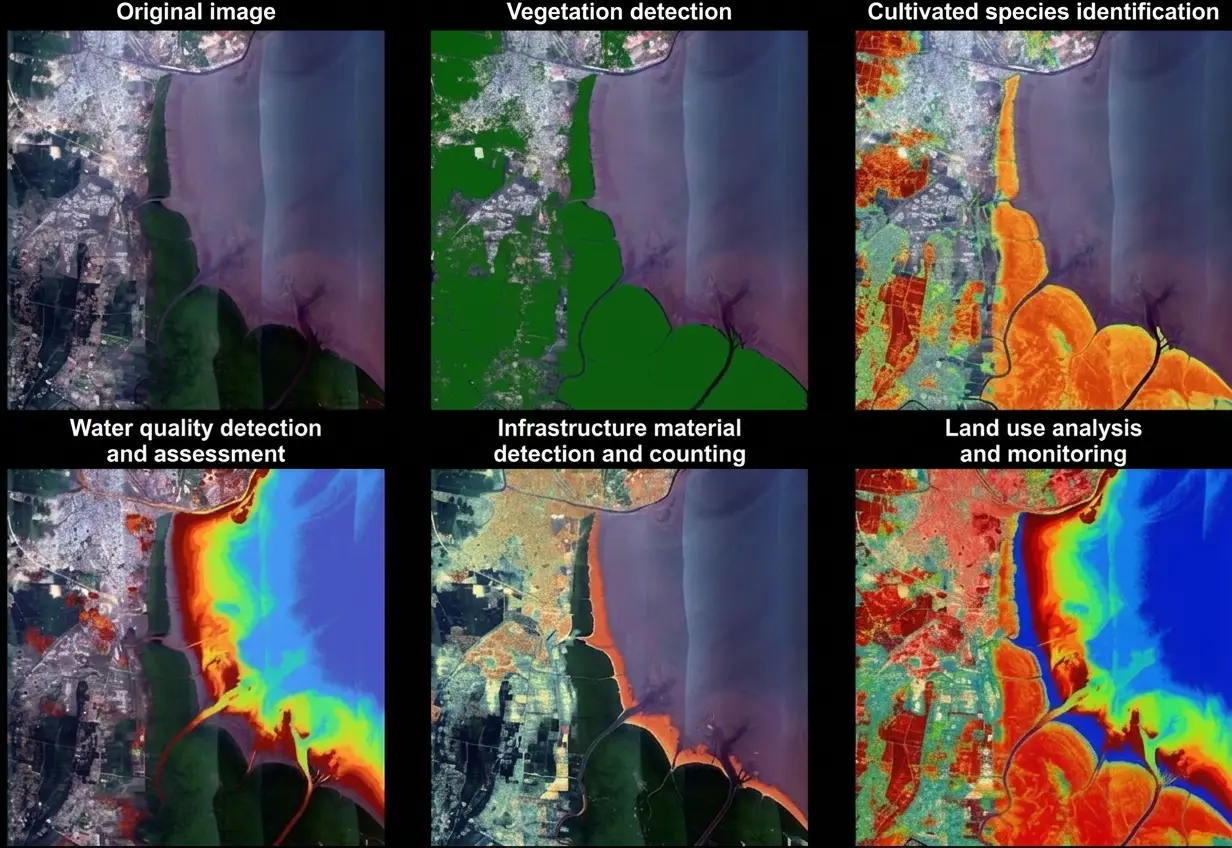
The same source describes its work: the platform uses deep learning to automatically detect and classify objects, activity patterns and changes in satellite imagery, and as the volume of available imagery grows faster than human analysts can keep up with, this kind of automation becomes a necessity rather than a luxury.
That last clause deserves noting. It states in commercial terms the bottleneck the AI article established in research terms: imagery grows faster than the capacity to interpret it.
Two consequences follow for a provider. A relationship established with a young company can continue after its acquisition, with a larger principal. And acquiring groups are themselves potential clients, generally less solicited than startups.
The effect of institutional funding
A dual dynamic distinguishes this sector from most other technology markets.
Alongside venture capital, public budgets fund a substantial share of activity. The sovereignty article described the programmes in preparation and the shift they represent.
Three consequences follow for companies. They hold two potential revenue streams, contractual and institutional, whose purchasing logics differ profoundly. Institutional demand offers visibility that commercial demand does not, which stabilises a business plan. And institutional requirements are heavier, particularly on documentation and security, which the security article detailed.
That third point creates a need a provider can serve. A company serving both markets must demonstrate a method it does not always possess, and it looks for suppliers able to help it do so.
Structuring by industrial blocs
One structural observation deserves stating, since it shapes how demand arrives.
The same study anticipates acquisition activity involving defence primes, energy majors and agricultural technology platforms acquiring data analytics or sensor capabilities.
Those three acquirer categories correspond to three application domains this series has covered: security, energy and resource monitoring, and agriculture.
The pattern that emerges is a consolidation by vertical rather than by technology. A defence group acquires a geospatial analytics capability because it serves defence, not because it is geospatial.
One consequence follows for a provider. Domain depth, which the market article recommended, matters more than breadth here, since the acquirers are structured by sector and their requirements follow their sector’s conventions rather than a common geospatial standard.
What these Earth observation actors have in common
Four characteristics recur across the population described.
They buy data rather than acquire it, except for the constellation operators, which places them downstream of the value chain the market article described.
Their differentiation rests on interpretation rather than on access, since the Copernicus article showed access is free and symmetric.
They operate in specialised segments rather than as generalists, the four positionings above illustrating it.
And their product improvement depends on models, which depends on corpora, which is the point at which a data provider becomes relevant to them.
Earth observation needs by type of actor
A practical reading distinguishes four situations, and confusing them in one offering does a disservice.
An early-stage company developing its first product needs a training corpus on a specific nomenclature, generally at modest volume and under real budget constraint.
A growth-stage company needs to extend its product geographically, which requires corpora on new regions and returns to the transferability question the AI article documented.
An established company needs evaluation corpora and drift monitoring, requirements earlier clusters described in regulated domains and which appear here under commercial constraint.
And a group that has acquired a young company needs to harmonise corpora built separately, low-visibility work that is regularly necessary after a merger.
Those four needs correspond to services of a different nature, with different volumes, different quality requirements and different price points.
The modernisation of institutional Earth observation missions
One development deserves flagging because it opens a distinct channel of demand.
Institutional programmes increasingly subcontract their processing and analytics rather than developing everything internally, which the sovereignty article described regarding the governmental service in preparation.
Three consequences follow. Companies of the population described become subcontractors to institutional programmes, which extends their addressable market. Institutional documentary requirements propagate down the chain to their own suppliers. And a provider serving those companies inherits requirements it did not negotiate directly.
That third consequence is worth anticipating. A provider working for a company that serves an institutional programme will be asked for traceability, provenance and processing location, and discovering those requirements mid-engagement is more expensive than holding them in advance.
How to approach these Earth observation actors
Four recommendations follow from the structure described.
Target the software layer rather than constellation operators, the distinction set out above indicating the former rest on models and therefore on corpora.
Adapt the proposal to the funding stage, an early-stage company and one that has raised a large round having neither the same means nor the same needs.
Position on developing segments rather than saturated ones. Thermal and hyperspectral, whose corpora are scarce as the AI article showed, offer better differentiation than optical.
And document the method, a company serving an institutional market having to demonstrate its own and looking for suppliers able to help.
The limits of this reading
An honest reading requires setting out what this description does not establish.
Funding figures date quickly and they measure capital raised rather than commercial success, two things that correlate imperfectly.
The named companies illustrate positionings rather than constituting a ranking, and other actors occupy comparable positions without appearing in the sources consulted.
Survival is not assured, the market article having noted that a sector with many entrants will not sustain them all.
And the acquisition pattern is anticipated by analysts rather than established, which means it describes a plausible direction rather than a certainty.
Those four limits lead to a practical recommendation. Use this landscape to understand the sector’s structure rather than to select prospects by name, the structure being stable where individual positions are not.
Capital deployment and what it indicates
One financing datum deserves stating because it explains the sector’s physiognomy.
Capital concentrates markedly. The share going to large rounds substantially exceeds that going to the youngest structures, which indicates a sector leaving its seeding phase.
Three readings follow. Already-financed companies hold substantial means, which makes them solvent potential clients. New entrants face harder conditions than five years ago, which filters projects. And that filtering raises the average quality of surviving companies, which makes them more demanding buyers.
That third reading matters for a provider. A better-financed and more selective clientele buys on method rather than on price, which favours a provider able to explain its own.
A provider’s place in the Earth observation ecosystem
One positioning observation deserves stating, since the ecosystem described has a gap.
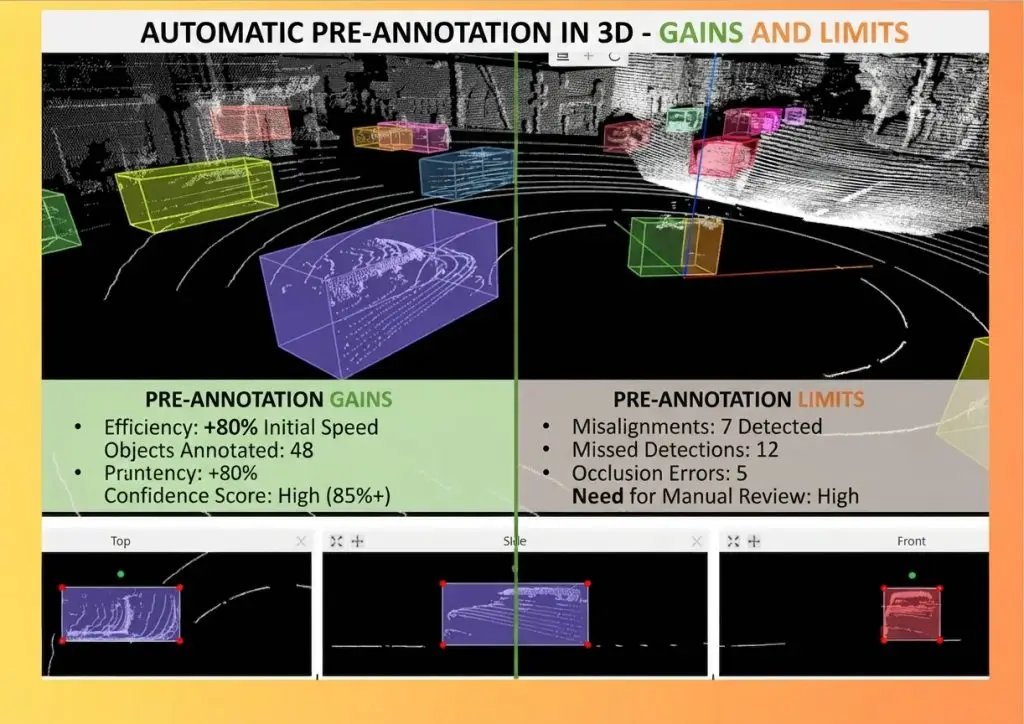
Constellation operators supply imagery. Software companies supply interpretation. Institutional programmes supply the free resource and the requirements. Nobody in that arrangement supplies ground truth as a product.
Three reasons explain that gap. It is labour-intensive rather than capital-intensive, which makes it unattractive to venture capital seeking scalability. It is geographically specific, which prevents it from scaling like software. And it requires domain expertise that varies by application, which prevents a single generic offering.
Those three reasons are precisely what makes the position defensible for whoever occupies it. A capability that does not scale like software also does not get displaced by software, and one that requires accumulated domain knowledge does not get replicated by a funding round.
What the Earth observation landscape suggests for coming years
Four directions are observable rather than speculative.
Consolidation by vertical, the acquirer categories anticipated indicating where it will occur.
Continued growth of the software layer relative to constellation operators, its lower capital requirement making it structurally more accessible.
Growing weight of institutional demand, the programmes in preparation representing volumes the commercial market does not match.
And increasing requirements on method, both from institutional buyers and from acquirers conducting due diligence on what they buy.
That fourth direction is the one that most concerns a data provider. A corpus whose composition, provenance and quality are documented survives an acquisition audit; one that is not documented becomes a liability in it.
The subject these companies discuss least
One closing observation concerns what the sector’s communication passes over.
Presentations emphasise constellations, resolutions, revisit rates and processing capability. They rarely mention what the models were trained on, over what geography, with what reference and with what measured error.
That silence is not deliberate concealment. It reflects that these questions are uncomfortable, since the AI article documented that available corpora are geographically biased and that inherited annotation carries a ceiling.
Two consequences follow. A buyer who asks these questions distinguishes suppliers quickly, since few have prepared answers. And a supplier able to answer them holds a differentiation its competitors cannot improvise.
That asymmetry is temporary. As institutional requirements propagate and acquirers audit what they acquire, these questions will become standard, and the companies that anticipated them will have an advantage over those that did not.
The difficulties specific to this clientele
An honest reading requires setting out what makes this segment demanding to serve.
Budgets are constrained, a young company arbitrating between product development and data purchase, and that arbitration rarely favours the latter early on.
Payment terms can be long, a startup’s cash position depending on its funding cycle rather than on its revenue.
Durability is not assured, which the market article flagged and which constitutes a real collection risk on a sector with many entrants.
And needs evolve quickly, a product pivot changing the specification of a corpus already in production.
Those four difficulties lead to a method recommendation. Working in short batches with intermediate deliveries rather than in large orders reduces exposure and fits the rhythm of these companies better.
One further practice helps. Agreeing the nomenclature and the edge case conventions before production, which the AI article recommended for technical reasons, also protects commercially: a specification agreed in writing survives a change of contact, which happens often in a growing company.
Working with an acquired Earth observation company
One situation deserves separating because it is increasingly common and it changes the relationship.
When a client is acquired, three things change for its supplier. The purchasing procedure formalises, replacing a founder’s decision with a procurement process. The documentary requirements rise, the acquirer’s standards applying to the acquired entity. And the volume may grow substantially, the acquirer’s resources exceeding those of the startup.
Two preparations make that transition favourable rather than disruptive. Holding documentation that satisfies the acquirer’s standards before it is requested, which the security article described. And having a written record of what was delivered and how, since the acquirer will audit it.
A provider prepared on both points converts an acquisition into an expansion. One that is not prepared frequently loses the account during the integration, not for quality reasons but for procedural ones.
What these companies buy, and when
One timing observation completes the needs analysis above, since arriving at the wrong moment costs a sale that would otherwise close.
Demand for a training corpus arrives when a company has validated its concept and is building the product, which is generally after a first substantial round rather than before it.
Demand for geographic extension arrives when a company signs its first client outside its initial market, which is usually a surprise to the company and therefore urgent.
Demand for evaluation corpora arrives when a company faces a buyer who asks for evidence, which the security and insurance articles showed happens in institutional and regulated markets.
And demand for harmonisation arrives after an acquisition, in the integration period when nobody has yet been assigned to it.
Those four moments are observable from outside. Funding announcements, first international clients, entry into a regulated market and acquisitions are all public events, which makes the timing of an approach a matter of attention rather than of luck.
Common errors of reading
These misreadings recur often enough that naming them is usually enough to avoid them.
These misreadings recur often enough that naming them is usually enough to avoid them.
- Treating constellation operators and software companies as one market.
- Addressing an identical offering to an early-stage and an established company.
- Taking an annualised projection for an observed result.
- Neglecting developing segments in favour of saturated ones.
- Ignoring that institutional clients impose distinct documentary requirements.
- Underestimating collection risk in a sector with high mortality.
- Proposing large orders to a clientele with irregular cash rhythms.
- Neglecting acquiring groups, less solicited than startups.
- Confusing a training need with an evaluation need.
- Assuming a geographic extension happens without a new corpus.
- Selecting prospects by name rather than understanding the structure.
- Reading capital raised as commercial success.
Why the ecosystem gap persists
A closing observation returns to the Earth observation gap identified above and asks why nobody has filled it.
The venture-backed model this article describes rewards a particular shape of business: high fixed cost, near-zero marginal cost, and a product that works identically everywhere. Software fits that shape. Constellations fit it once launched.
Ground truth production fits none of it. Its cost scales with output, its quality depends on people who know a region and a domain, and what works in one place must be rebuilt for another.
The consequence is that the capital flooding this sector systematically routes around the bottleneck it complains about. Investors fund what scales, the scarce input does not scale, and so the scarcity persists regardless of how much money enters the field.
That is an unusual market position and it is worth naming plainly. A capability that capital cannot easily buy its way into is a capability that competition arrives at slowly, which makes it a rare thing in a sector where everything else is being funded at speed.
What to take away
The Earth observation sector is transitioning from a government-led utility to a commercially competitive, venture-backed industry, which changes what its companies need and how they buy.
Three readings emerge. Software companies can scale with less capital than constellation operators, several showing strong funding without owning satellite fleets, which makes them the natural clientele for an annotation offering since their product rests on models. Consolidation is anticipated by vertical rather than by technology, defence primes, energy majors and agricultural platforms acquiring analytics or sensor capabilities, which makes domain depth more valuable than breadth. And nobody in the ecosystem supplies ground truth as a product, because it is labour-intensive, geographically specific and domain-dependent, which are precisely the three reasons the position is defensible for whoever occupies it.
For the quality question these products raise, the article on validating Earth observation products examines the methods. For the economic structure these actors operate in, the article on the Earth observation market describes the layers.
To explore delivery arrangements, supported formats and applicable control mechanisms, see our dedicated page on geospatial data processing. And if you are developing a geospatial product requiring a training or evaluation corpus, let us discuss your project.