

The volume of data described by humans has been falling for several years while total spending keeps rising. That apparent contradiction sums up what is at stake in this work.This article sets out those developments. It extends the article on the ethics of labeling.
What automation displaces
Five effects accompany the rise of tools in data labeling.The simplest and most repetitive tasks are now handled automatically.The remaining share now concentrates the most difficult cases.The unit cost of the remaining elements rises appreciably.Control now takes a proportionally greater place.And scoping keeps exactly the same weight as before.One important practical consequence follows. The last effect explains the contradiction between volume and spending, automation reducing one item out of five and leaving the others intact.What competences become
Five developments are redrawing the profile sought in data labeling.Speed of execution gradually loses its relative value.Recognising ambiguous cases gains a great deal instead.Knowledge of the field handled often becomes indispensable.The capacity to document a decision is strongly valued.And review work takes precedence over production work.One important observation follows for a data labeling project. The second development answers the first directly, a machine handling quickly what it knows how to do and leaving precisely what it cannot recognise.What new uses demand
Five needs appear beyond classic data labeling.Judging generated output rather than describing it.Verifying the facts stated by a generative system.Evaluating an agent’s behaviour across a complete task.Building test scenarios meant to put a system through its paces.And documenting precisely the cases where a system fails.One practical consequence follows. Those five needs require business expertise well above that of ordinary description, which profoundly changes the profile of the people recruited.What pre-annotation actually changed
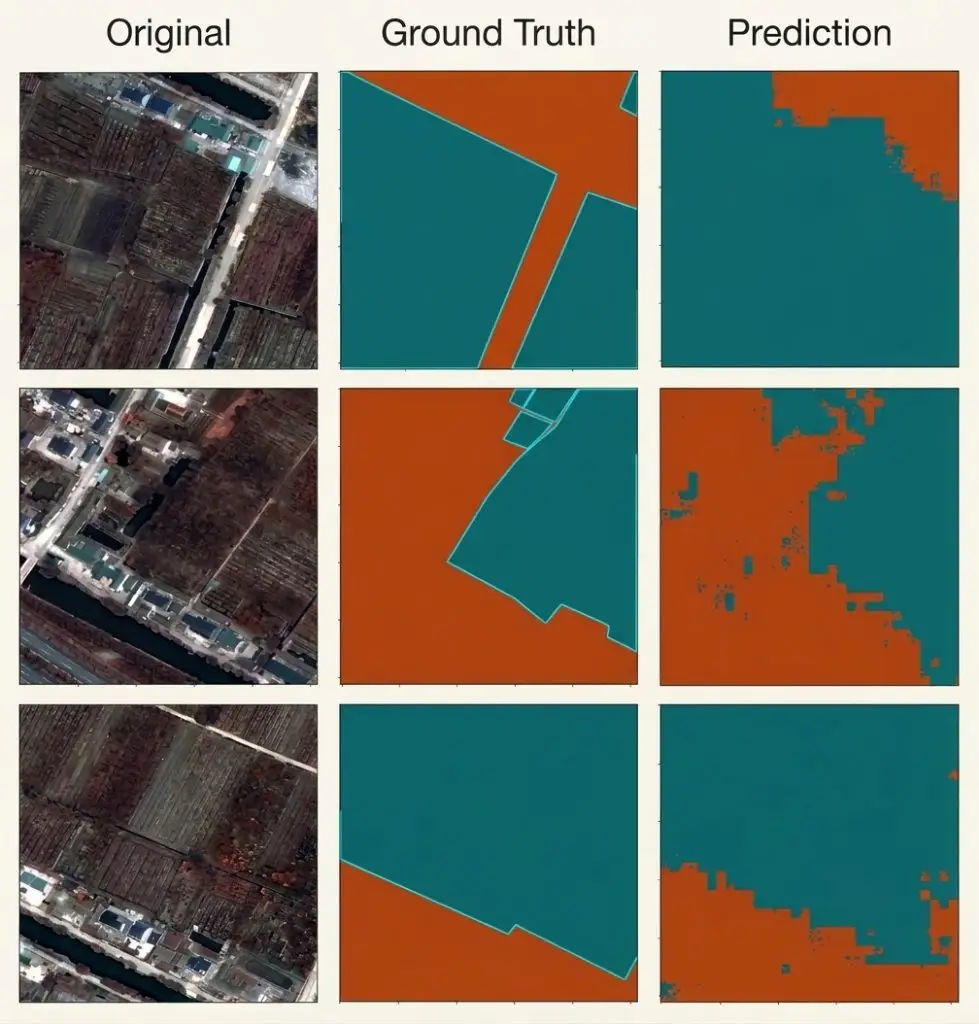
Five observations drawn from several years of practice.Throughput improves sharply on the easiest data.The omission rate rises markedly on the cases the model misses.The operator ends up validating more than genuinely observing.The gain concentrates entirely on the share already mastered.And control must tighten precisely where it was slackening.One important practical consequence follows for a data labeling project. Those five observations hold for every form of automatic assistance that will follow, which makes this experience the best available guide for anticipating what future tools will bring and what they will cost.What client requirements change
Five demands are gradually settling into contracts.A complete documentation of the reference delivered with the corpus.A traceability of the origin of each item of data handled.A measure of omission and no longer of agreement between operators alone.A complete transparency on the production chain employed.And a guarantee on the working conditions applied.One observation follows. The second demand comes from the regulatory use of systems, a corpus whose origin cannot be established becoming unusable in several sectors.What the market becomes
Five movements characterise the evolution of the data labeling market.Competition on unit price alone gradually loses its sense.Generalist providers gradually cede ground to specialists.Projects move towards fields requiring real expertise.Volumes ordered fall while their unit value rises.And the relationship becomes far more durable than a one-off order.One important practical consequence follows for a data labeling project. The last movement follows logically from the others, a client having invested in a reference and a trained team changing provider at a cost well above the plain rate difference.What data for agents introduces
Five differences separate these needs from classic description.The unit of work becomes a complete task and no longer a plain element.The judgement bears on a sequence of actions rather than an instant.The result judged correct admits several equally possible paths.The evaluator must understand the objective the agent really pursues.And the length of a single evaluation counts in minutes rather than seconds.One important practical consequence follows for a data labeling project. The third difference complicates the whole measurement arrangement, two different action sequences reaching the same objective being comparable by no simple indicator, which brings this work close to the judgement described in the chapter on generative uses.What does not change
Five findings cross this course untouched by these developments.An ambiguous instruction always produces an error nothing signals.Omission stays invisible in any control of the existing.A high agreement never guarantees correctness or exhaustiveness.Scoping decides far more than execution.And a corpus devoid of documentation loses its value over time.One important observation follows for a data labeling project. Those five findings depend on no particular technology, which explains why they cross the developments above unchanged and will stay true of tools nobody has yet seen.What regulation is progressively imposing
Five requirements are settling into several sectors.A documentation of the data that served for training.A traceability of the origin and the associated rights.An evaluation of the biases effectively carried by the corpus used.A retention of the records permitting an audit at any later moment.And a clear identification of artificially produced data.One important observation follows for a data labeling project. Those five requirements turn documentary work long treated as optional into a condition of market access, which retrospectively vindicates the projects that were already documenting their reference with nothing compelling them to.Three errors proper to this period
Three defects recur in current data labeling projects.An automation expected to bring a strictly proportional budget fall.A recruitment founded on speed alone in work that has become judgement.And a documentation treated as a plain accessory rather than a deliverable.Those three defects are committed today and paid for in two years, they bear on anticipation rather than on execution, and their common point is to project onto the current work an image that is already out of date.What the client must anticipate here
Five decisions gain from being taken before being compelled.Requiring the reference documentation from the next project onwards.Verifying that each item’s origin stays clearly established.Building a real evaluation set that will outlive all successive corpora.Favouring a durable relationship over an endlessly repeated tender.And treating generative uses as a genuinely distinct kind of work.One important practical consequence follows for a data labeling project. The third decision produces the most durable benefit, a real and well described evaluation set keeping its value while training corpora succeed and replace one another, which makes it a programme’s most profitable asset.What this chapter shares with the previous ones
Three findings recur from the start of this course.Automatic help speeds up the easy share and worsens omission.Scoping keeps its weight whatever method is employed.And documentation determines a corpus’s value over time.One important observation follows for a data labeling project. Those three findings held chapter after chapter on subjects with no apparent connection, which suggests they describe the nature of this work rather than a passing state of the technology.What this subject has that is particular
Four traits distinguish this chapter from the course’s others.It bears on what is not yet genuinely established.It describes work whose imminent disappearance has long been announced.It sets a fall in volume against a constant rise in requirements.And it closes a whole course rather than opening a subject.One important practical consequence follows for a data labeling project. The second trait deserves noting, the announced disappearance having translated so far into a shift of the work towards more demanding tasks, which invites caution before the most categorical predictions.What tools will actually bring
Five observations temper the strongest announcements.A tool speeds up only what the underlying model already knows how to do.It stays entirely blind to situations absent from its training.It shifts the work towards verification instead of removing it.It requires far tighter control precisely where the operator slackens.And it never settles a case the reference had not provided for.One important observation follows for a data labeling project. The last observation sums up any tool’s structural limit, a machine applying a convention without ever being able to write one, which leaves intact the work this course has described as the most determining.What specialisation by field produces
Five effects accompany the shift towards specialised needs.The reference requires business knowledge few people possess.Training a new operator lengthens considerably.The pool of genuinely qualified people shrinks sharply.The value of an assembled team rises accordingly.And replacing a provider becomes far more expensive.One important practical consequence follows for a data labeling project. Those five effects reinforce one another, a growing specialisation making teams rarer and harder to rebuild, which progressively turns a service market into a partnership market.What these developments change about the economics
Five effects modify the structure of a data labeling budget.The production item falls steadily as automation advances.The scoping item keeps exactly the same absolute value.The control item rises in proportion to the volume genuinely handled.The documentation item now appears where it did not exist.And the hourly cost of qualified people rises very markedly.One important observation follows for a data labeling project. Those five effects explain the contradiction noted at the outset, a stable or rising total budget being able to accompany a halving of the volume described, which makes any forecast founded on volume alone misleading.What evaluation becomes in these projects
Five observations concern the evaluation set’s growing place.It is described with markedly more care than the training corpus.It stays entirely human when production no longer is.It keeps all its value well after the corpora are renewed.It becomes the only genuinely independent measure of a deployed system.And building it represents an ever growing share of the order.One important practical consequence follows for a data labeling project. The second observation sketches the work as it is evolving, a growing share of human work concentrating on measurement rather than production, which brings this chapter back to the finding that crosses the whole course.What the provider brings here
Four contributions distinguish a party prepared for these developments.A trained team able to handle cases nothing automates.A documentation delivered systematically with every corpus.A traceability of origin maintained without being asked for it.And an ability to advise on what is worth automating.One important practical consequence follows. The last contribution contradicts the apparent commercial interest, a provider flagging that part of a need no longer justifies human work reducing their own order, whereas they gain precisely the durable relationship these developments make determining.What this chapter presupposes of the provider
Five practices distinguish a party that anticipates from one that endures.Documenting every corpus without ever waiting for a client to require it.Training the teams for generative uses before the first order.Flagging to a client the share of their need that already automates.Keeping the record of the data’s origin as a systematic matter.And investing in team stability rather than in volume alone.One important practical consequence follows. The third practice looks contrary to the provider’s interest and serves them directly, a client honestly advised on what no longer deserves human work coming back with the needs that do.What this chapter closes
Fifteen chapters have examined this work from different angles.Scoping returns each time as being the decisive point.Measuring what is missing appears as the most useful control.Documentation becomes the only piece that truly outlives the corpus.And people determine a quality no tool knows how to produce.One important practical consequence follows for a data labeling project. Those four observations hold in one sentence, a corpus being worth what somebody decided, measured and wrote far more than the number of elements it contains.What this course leaves the reader
Five reflexes are worth more than knowing the fifteen chapters.Asking on which exact population a figure was calculated.Looking for what is missing before verifying what already appears.Writing a rule by systematically testing it on two different readers.Requiring the documentation at the same time as the corpus delivery.And asking about an observed price gap rather than seizing it.One important observation follows for a data labeling project. Those five reflexes require no technical competence and suffice to avoid most of the defects described across this course, which makes them more useful than any methodological detail retained from these chapters.Approaching these developments
Five questions scope these developments on a data labeling project.What share of the need already automates. Often the simplest.What expertise does the rest require. Generally more.Is the reference documented. It becomes a deliverable.Is the origin traceable. Several sectors require it.And is the team stable. That is what is becoming rare.Those five answers determine a project’s position within these developments. Asking them helps separate what changes from what remains.The question that frames these developments
One question determines a party’s position in data labeling.Do they sell a production capacity or a scoping competence.A production capacity, hours available for describing data, is compared on price and stands directly exposed to automation.A scoping competence, the ability to write a reference and to measure what is missing, is compared badly and bears precisely on what tools do not replace.That question belongs to what is genuinely sold, it is asked before any technological consideration, and it separates two trajectories these developments push further apart each year.Three decisions to prepare
Three decisions position a data labeling project.Documenting the reference as a deliverable and not a purely internal piece.Stabilising a team rather than adjusting its size to the volume.And tracing the origin of each item of data from today.Those three decisions cost little to take now, they become hard to catch up on later, and their absence will be paid for the moment a client requires them with no notice.Three checks on a provider today
Three controls qualify a data labeling party.The documentation they hand over spontaneously with every corpus.The stability of their teams observed across several successive projects.And their capacity to handle generative as well as agentic uses.Those three controls are each asked in one question, they require no technical competence, and their absence signals a party positioned on the share of the work that is shrinking.Three questions before committing
Three questions prepare a project for the developments described.Will the provider deliver the documentation with the corpus.Will the data’s origin stay established and verifiable.And will the team assigned be stable over time.Those three questions are asked before signing, they require no technical competence, and their absence produces a corpus hard to reuse as soon as the context changes.What this chapter teaches
One cross-cutting observation deserves closing this course.The volume falls while the requirement rises.Three findings compose it.Automation reduces only one spending item out of five.The remaining share concentrates exactly what no machine settles.And documentation becomes a real deliverable rather than an accessory.That finding extends every chapter, scoping and control taking the place production once occupied.Why the disappearance keeps being announced
One point about how this work gets talked about belongs at the close.Every new capability is presented as the end of human labeling.Three reasons follow in data labeling.The visible part of the work is the part that automates first.The scoping and measuring work happens where nobody watches.And a demonstration always runs on the easy share of a corpus.One important practical consequence follows for a data labeling provider. Explaining which item automates and which four do not is worth doing early, since a client who budgeted for the announced disappearance will treat the remaining cost as a failure of the provider rather than as the arithmetic nobody set out for them.What stays worth building here
Four assets keep their value across these developments.A team that has accumulated knowledge of a field.A reference documented well enough to survive its authors.A real evaluation set nobody has to rebuild.And a relationship in which the difficult questions get asked.One important observation follows for a data labeling project. The fourth asset is the least tangible and the one that determines the others, a client and provider who can discuss what is going wrong correcting a defect in weeks that an arms-length relationship would let run for the length of the project.Common mistakes
These failures recur often enough that naming them is usually enough to avoid them.- Expecting a proportional budget fall from automation.
- Recruiting on speed in work that demands judgement.
- Neglecting documentation now that it is a deliverable.
- Comparing providers on unit rate alone.
- Entrusting a specialised need to a generalist team.
- Assuming generative uses belong to the same methods.
- Ignoring the traceability requirements proper to certain sectors.
- Treating team stability as a plain convenience.
- Believing the work will disappear with automation.
- Waiting for these developments to arrive before preparing.