
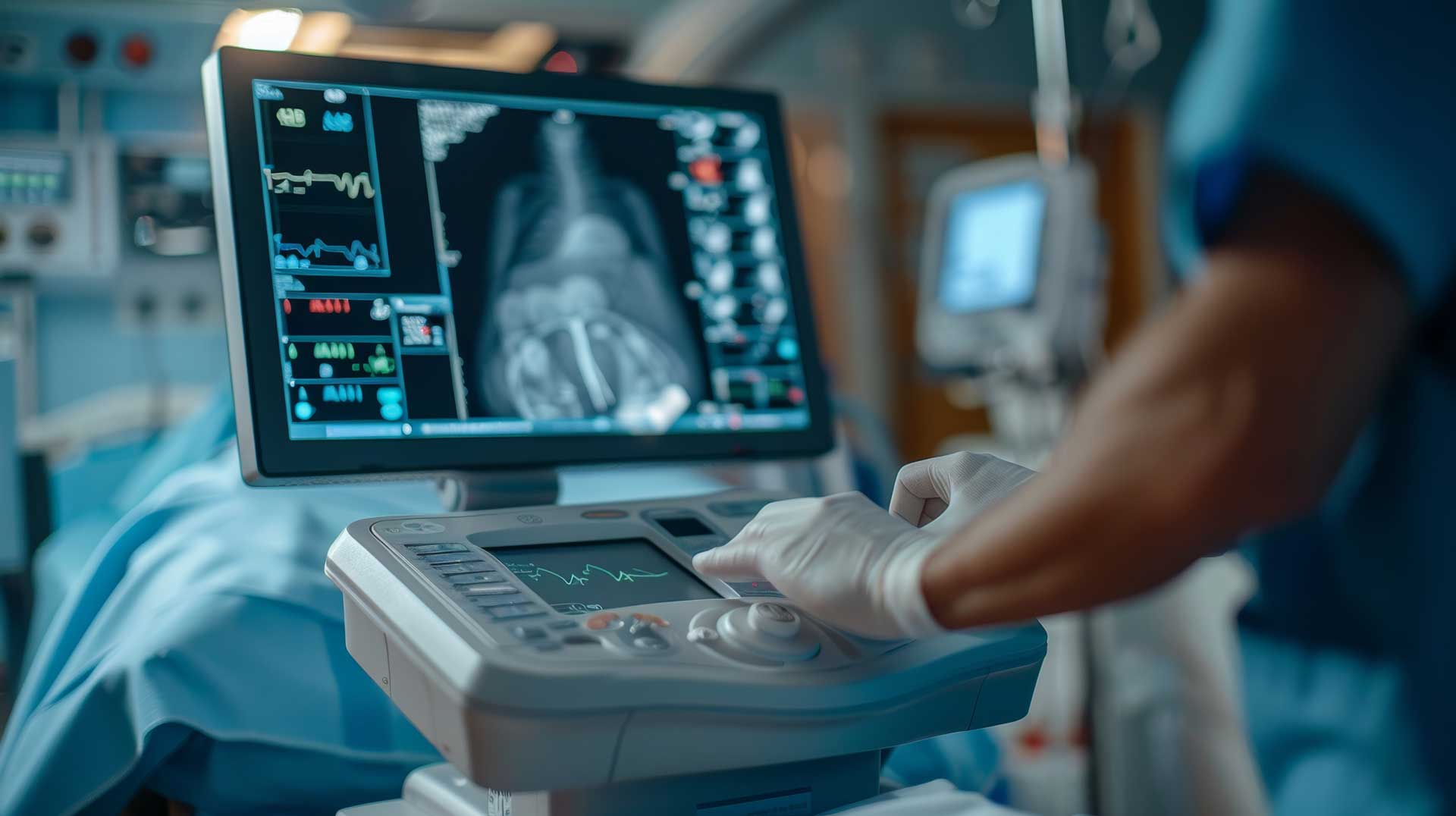
Image annotation and
medical data processing
Reliable medical data for accurate diagnoses: text, images, videos, CT scans, X-rays, MRI.
Home > Image annotation and medical data processing

What we do
More than 50 specialized physicians bring expertise and precision to every project
A diverse medical team — radiologists, cardiologists, general practitioners, pediatricians, and others — puts its expertise at the service of your project.
Accurate medical annotations and reliable datasets, designed to boost the performance and efficiency of your healthcare AI models.
Rigorous and controlled process
We help R&D teams, data scientists, computer vision specialists, and innovation stakeholders build the essential foundations of their AI projects: reliable, accurate, and perfectly annotated data.
Our services cover the entire data preparation lifecycle, including image, video, and document annotation, segmentation, indexing, and data curation.
Each project is conducted with rigor, full traceability, and multi-layer quality control, ensuring an optimal level of accuracy.
Security and ISO 27001 compliance
At Infoscribe.ai, data protection and compliance are at the core of our priorities.
We use secure tools and processes that strictly comply with GDPR requirements to ensure the confidentiality, integrity, and traceability of your data.
Depending on project sensitivity, we can rely on HDS-certified servers, ensuring compliance with the most stringent standards for processing and storing sensitive data, while providing a reliable and secure environment for your operations.
Technologies and tools
Behind every dataset lies human expertise.
Our annotators, supervisors, and quality engineers work closely with our clients to understand their needs, adapt methodologies, and deliver fully usable datasets optimized for AI model performance.
This approach combines human expertise, technical rigor, and innovation, ensuring that your data becomes a true strategic asset—supporting decision-making, improving operational efficiency, and maximizing the value and reliability of your artificial intelligence projects.
EXpertise
Medical data processing is a strategic and scientific step essential for healthcare artificial intelligence
At Infoscribe, we combine medical expertise, advanced technology, and ISO 27001 rigor to create precise, reliable, and secure datasets. These datasets enable the training of AI models capable of accurately detecting pathologies, supporting biomedical research, and assisting healthcare professionals in their diagnoses.
Trust Infoscribe to transform your medical images and data into high-quality, secure, and usable annotated data, maximizing the potential of your artificial intelligence projects in the medical field.
Medical Image Annotation for AI
Cell segmentation on microscopic images
Precise cell segmentation for researchers in cell biology and pathology, generating reliable datasets for AI and research.
Annotation of dermatological pathologies on clinical images
Identification and annotation of skin conditions to help dermatologists diagnose and treat patients effectively
Detection of fractures and foreign objects on CT scans
Accurate analysis of bone fractures and foreign objects to enable radiologists to quickly identify critical abnormalities.
Detection of dental anomalies on X-rays
Annotation of dental anomalies, facilitating accurate diagnosis for dentists and dental specialists.
Brain MRI analysis
Segmentation of brain structures and anomalies to assist neurologists and neurosurgeons in detecting tumors or lesions.
Detection of pulmonary nodules on chest X-rays and CT scans
Identification of nodules and lung anomalies for pulmonologists, supporting early diagnosis of lung cancer and other respiratory conditions.
Annotation of tissues and organs for AI-assisted surgery
Segmentation to prepare AI models for assisted surgery, improving the precision and safety of interventions.
Annotation of obstetric and gynecological ultrasounds
Segmentation of the fetus, organs, and key structures for obstetricians and gynecologists, enhancing prenatal monitoring and diagnostics.
Retinography and ophthalmological image analysis
Detection of retinopathies, glaucoma, and other ocular anomalies for ophthalmologists and specialized AI models.
Annotation of gastrointestinal lesions on endoscopies
Marking of polyps, ulcers, and other anomalies for gastroenterologists, facilitating patient diagnosis and follow-up.
Biopsy and histopathology analysis
Segmentation and annotation of tissues for pathologists, enabling the detection of cancers or specific diseases via AI.
Detection of cardiovascular diseases on echocardiograms and cardiac MRI
Segmentation of cardiac structures, valve anomalies, and plaques to help cardiologists and researchers assess risks.
Annotation for radiotherapy and oncological planning
Precise delineation of tumors and organs at risk, optimizing treatment plans and patient safety.
Post-operative monitoring and longitudinal imaging
Annotation and comparison of pre- and post-operative images to track recovery or the progression of pathologies.
Medical Transcription for AI
Medical Audio Transcription
Accurate transcription services for medical recordings, consultations, conferences, seminars, and clinical discussions, performed by professionals trained in medical terminology
Medical Document Transcription
Conversion of written, scanned, or handwritten documents into structured electronic formats, compliant with industry standards and regulations (GDPR, HIPAA, etc.).
Multilingual Transcription
Transcription and normalization of medical content in multiple languages, creating datasets usable internationally and supporting the development of multilingual AI models.
Clinical Notes Summarization and Structuring
Extraction of key information from consultation notes, reports, and correspondence, enabling rapid analysis and enriching patient records.
Coding and Indexing for AI
Integration of transcribed data into standardized formats (ICD, SNOMED, LOINC), facilitating use by healthcare systems and AI applications.
Training of Medical Speech Recognition Models
Use of annotated transcriptions (speakers, specialties, clinical segments, types of procedures) to train and evaluate speech-to-text models tailored to medical vocabulary.
Transcription Security and Quality Control
Proofreading, validation, and annotation of transcriptions by medical experts to ensure high accuracy, resolve ambiguities, correct critical errors, and produce reliable datasets for training and evaluating clinical AI models.
Medical Text Annotation for AI
Named Entity Annotation
Precise identification and tagging of entities in medical texts: drug names, diseases, treatments, dosages, procedures, and medical history.
Clinical Information Extraction
Structuring data from electronic medical records (EMRs) and patient documents, facilitating information management, clinical follow-up, and medical decision-making.
Creation of Standard Medical Reports
Production of clear, concise reports compliant with healthcare institution and professional requirements, delivered on time, ensuring reliability, quality, and efficiency for your AI projects.
Medical Data Coding and Standardization
Conversion of clinical information into international standards (ICD, SNOMED, LOINC) for optimal interoperability and easy use by healthcare systems and AI applications.
Analysis of Consultation Notes and Correspondence
Annotation of clinical notes, reports, and medical letters to extract key information and improve the quality of AI datasets.
Detection of Medical Relationships and Associations
Identification of relationships between diseases, treatments, and side effects to create structured datasets used in medical research and predictive modeling.
Multilingual Text Analysis
Annotation and normalization of medical documents in multiple languages, making datasets usable internationally.
Pharmacovigilance and Adverse Events
Annotation of mentions of side effects, drug interactions, and therapeutic incidents in clinical texts to feed alert systems, enhance patient safety, and support AI-assisted pharmacovigilance studies.
FAQ
Frequently Asked Questions
Infoscribe supports a wide range of medical imaging modalities to meet the diverse needs of healthcare AI projects, whether for anomaly detection, assisted diagnosis, organ segmentation, or predictive analysis. The variety of formats the company can handle allows it to assist research laboratories, hospital departments, medtech startups, and industrial developers of medical computer vision solutions.
Among the most common modalities, Infoscribe fully supports X-rays, widely used in projects for fracture detection, lung anomalies, or thoracic analysis. These 2D images require precise, standardized annotations compatible with common medical formats.
The company also handles Magnetic Resonance Imaging (MRI), a key modality for studying the brain, soft tissues, joints, or complex pathologies. MRI series, often consisting of multiple slices and sometimes in 3D, require specific expertise to segment anatomical structures, annotate lesions, or prepare volumes for specialized deep learning models.
CT scans are also supported. These volumetric images allow detailed analysis of internal structures such as the thorax, abdomen, or spine. Infoscribe can annotate full volumes and produce 3D masks, essential for augmented radiology or automated diagnostic projects.
The company can also process ultrasound data, a more challenging format due to noise, low contrast, and operator dependency. Projects may include organ segmentation, identification of pathological regions, or fetal analysis in obstetrics.
Additionally, Infoscribe can handle data from more specialized modalities, such as histopathology (digital microscopic slides), dermatology (high-resolution skin images), and ophthalmology, including fundus images or OCT (optical coherence tomography), commonly used in projects for AMD or diabetic retinopathy screening.
Infoscribe supports various medical file standards, such as DICOM, NIfTI, or anonymized images in PNG/JPEG, enabling seamless integration into AI model training and evaluation pipelines.
Thanks to this versatility, the company covers the majority of modern medical imaging needs, from 2D to 3D, from general applications to highly specialized use cases.
Infoscribe accepts and delivers a wide range of medical file formats to ensure maximum compatibility with tools used in clinical, hospital, and biomedical research environments. This diversity allows easy integration of data into AI pipelines, PACS systems, deep learning platforms, or specialized analysis tools.
The most commonly supported format is DICOM (Digital Imaging and Communications in Medicine), the international standard for medical imaging. It is used for X-rays, CT scans, MRIs, ultrasounds, and many other modalities. Infoscribe can process and deliver complete DICOM files, preserving the metadata required for processing, or as anonymized versions when strict confidentiality and regulatory compliance (GDPR, HIPAA, etc.) are needed.
Medical AI projects often require preprocessed data, so Infoscribe also delivers formats more suited to machine learning pipelines, such as PNG or JPEG images, when conversion is possible and clinically relevant. These formats are frequently used for 2D classification or segmentation tasks, especially in dermatology, standard radiography, or ophthalmic imaging.
For volumetric data, the company supports structured formats like NIfTI (.nii / .nii.gz), widely used in neuroimaging, 3D MRI, and organ segmentation. This format is particularly valued by research teams and projects using 3D U-Net architectures or networks specialized in medical volumes.
Infoscribe also accepts TIFF, BMP, as well as compressed archives containing image series, facilitating import/export of large datasets.
For projects requiring masks or annotations, deliverables can be provided in JSON, XML, COCO, mask PNG, NIfTI volumes, or any other format requested by the client, ensuring full integration into internal workflows.
Thanks to this full compatibility with standard medical formats, Infoscribe ensures smooth and reliable integration of annotated data into clinical tools and artificial intelligence models
lle.
At Infoscribe, the execution of medical annotations depends directly on the nature of the project, the expected level of precision, and the clinical sensitivity of the data. Two complementary approaches can be implemented to ensure performance, reliability, and compliance.
1. Annotation performed by medical specialists
For projects requiring strong clinical expertise—such as tumor detection, annotation of complex lesions, 3D organ segmentation, or cases where expert medical interpretation is essential—Infoscribe involves medically trained annotators.These may include:
- General practitioners
- Radiologists
- Imaging technicians
- Specialists trained in specific modalities (MRI, CT, histopathology, OCT, etc.)
These profiles ensure annotations comply with medical standards and meet the requirements of assisted diagnosis models.
2. Annotation performed by specialized annotators supervised by experts
For more repetitive, structural tasks or projects requiring large datasets—simple segmentation, classification, masking, annotation of obvious contours—Infoscribe mobilizes experienced annotators specifically trained in medical imaging.These teams never work alone:
- They follow guidelines validated by a specialist
- They are supervised by a medical expert
- Their annotations are reviewed, corrected, and validated through a multi-level quality control process
This method combines scalability (large volumes), speed, and clinical rigor while optimizing costs.
3. Double validation or third-party validation
For critical projects, an additional step can be integrated:- Double annotation (two annotators + referee)
- Final medical validation
- Or external audit according to client requirements
Infoscribe implements strict guarantees for security, confidentiality, and GDPR compliance, which are particularly essential when handling sensitive data such as medical information or personally identifiable data.
1. Infrastructure and Access Security
Infoscribe relies on secure environments, including:- Hosting on servers compliant with European standards
- Strictly controlled access via strong authentication
- Connection logging and activity monitoring
- Segregation of environments to prevent data leaks or mixing
- Encrypted data transfers (HTTPS, VPN, secure protocols)
These measures ensure that only authorized personnel can access project data.
2. Confidentiality of Processed Data
The company enforces strict internal policies:- Systematic signing of confidentiality agreements (NDAs)
- Access limited to the strict minimum (“least privilege”)
- Prohibition of copying, extracting, or storing data locally
- Systematic anonymization whenever possible or required
For medical data, direct or indirect identification is avoided, in accordance with industry best practices.
3. GDPR and European Standards Compliance
Infoscribe fully complies with the General Data Protection Regulation (GDPR), including:- Processing limited to purposes defined with the client
- Data retention strictly controlled
- Appointment of a Data Protection Officer (DPO)
- Up-to-date processing records
- Documented procedures to respond to individual rights (access, rectification, deletion)
For particularly sensitive data (e.g., medical), Infoscribe follows enhanced GDPR requirements for health data.
4. Traceability and Quality Control of Processes
Every step of processing is traced, documented, and controlled. Data flows are audited, and sensitive operations are validated by authorized personnel.With these guarantees, Infoscribe ensures secure, compliant, and responsible handling of all entrusted data, including the most sensitive.