
Image Annotation and Data
Processing données for the
Automotive Sector
Reliable Datasets for Embedded AI: Cameras, LiDAR, Radar, In-Vehicle Videos, and Urban Data Streams
Home > Image Annotation and Data Processing for the Automotive Sector

What We Do
A Team of Data & Vision Experts for Automotive sector
We support R&D, data, and perception teams in creating reliable datasets for embedded AI. Our services include multi-sensor annotation (cameras, LiDAR, radar), segmentation, object tracking, and indexing, with multi-layer quality control ensuring consistency and traceability.
Rigorous and Controlled Process
Each project follows a clear methodology: annotation protocol design, deployment of appropriate tools, iterative development, and continuous validation.
Tasks are audited by our quality experts, with precise metrics on inter-annotator consistency and data stability across successive versions..
Security & Compliance (ISO 27001 / GDPR)
Our pipelines are designed to guarantee security and compliance, including encryption, access control, environment segregation, and full logging.
Data retention and processing comply with GDPR and ISO 27001 standards, providing complete confidence in managing sensitive datasets.
Multi-Sensor Annotation
We cover cameras (mono, stereo, 360°), LiDAR, radar, and video: 2D/3D segmentation, multi-object tracking, sensor fusion, and temporal analysis.
Data are standardized using industry ontologies and harmonized schemas. Quality is measured through dedicated metrics, active sampling, and inter-annotator cross-checks to ensure AI model consistency and performance.
EXpertise
Data annotation and segmentation are essential to the transformation of the automotive sector
At Infoscribe, we combine technical expertise, human precision, and advanced annotation tools to deliver reliable, consistent datasets that meet industry standards. These datasets power embedded AI models, enhance environmental perception, and improve road safety.
Trust Infoscribe to transform your images, videos, and sensor data into high-quality, secure, and ready-to-use annotated information, accelerating your automotive AI projects.
Image and Video Annotation for AI – Automotive Sector
Incident Analysis
Environmental perception, obstacle detection, multi-object tracking, scene understanding, trajectory anticipation, and behavior prediction
ADAS (Advanced Driver Assistance Systems)
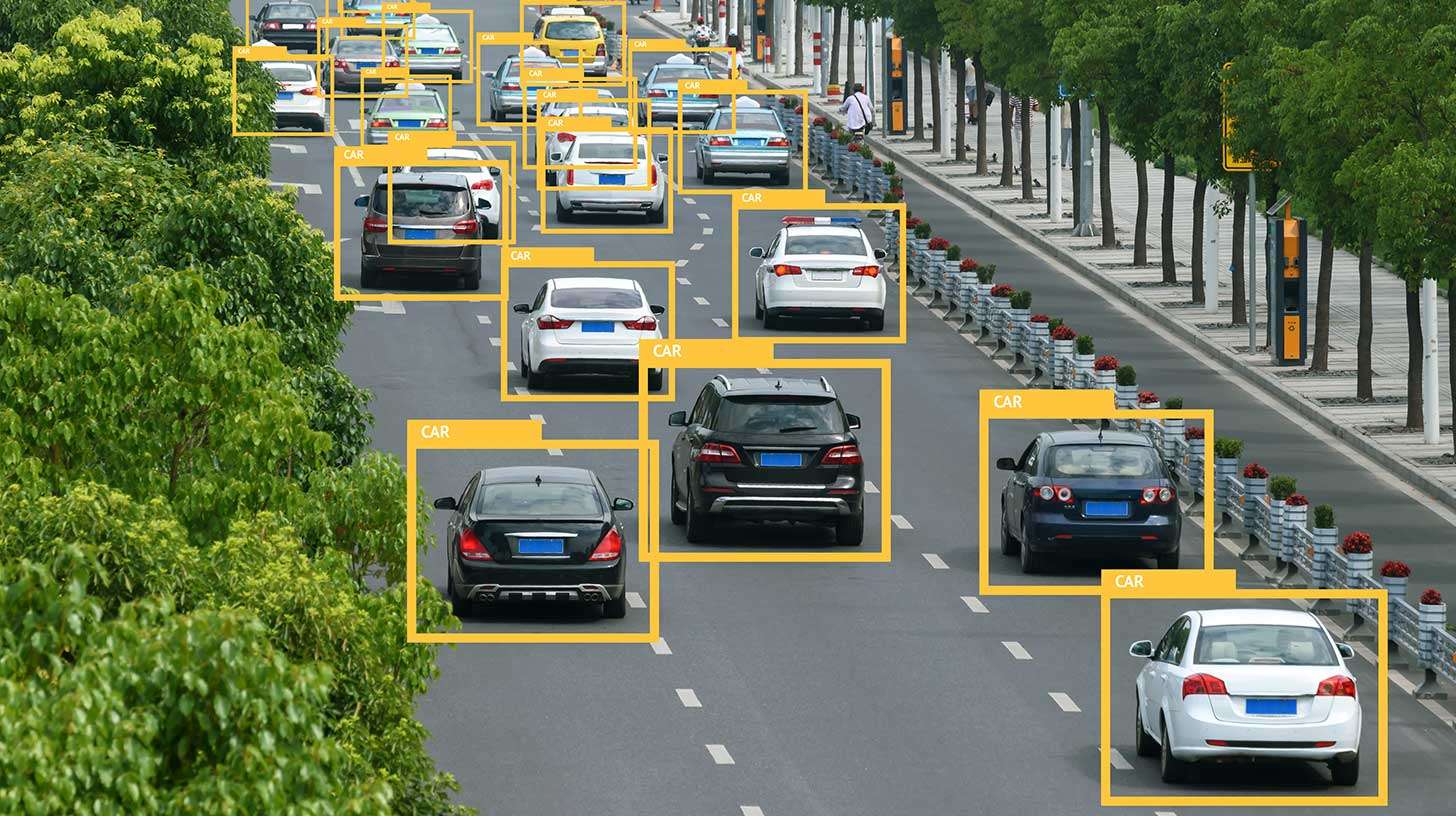
Detection of pedestrians, cyclists, and vehicles; recognition of vertical and horizontal traffic signs; lane departure detection; trajectory and distance analysis.
Traffic Flow Analysis
Vehicle counting and classification, speed and density calculation, detection of critical interactions, heatmap generation, incident and near-miss analysis.
Automotive Inspection
Detection and segmentation of damages (bodywork, glass, tires), damage estimation, parts classification, automated inspection in factories or post-accident.
Assembly Step Control via Onboard Vision
Analysis of images from a camera mounted on the operator to verify complete execution of assembly steps and detect potential omissions on the production line.
Distance and Trajectory Estimation
Stereoscopic annotation to train models for measuring distances between objects.
Infrastructure Monitoring & Predictive Maintenance
Detection of wear on roads, signage, barriers, panels, or urban equipment; integration into AI-assisted maintenance platforms.
Multi-Object Tracking
Annotation of moving objects to predict trajectories and behaviors in real time.
Quality Inspection
Annotation of vehicle images in factories to detect manufacturing defects, scratches, or anomalies.
Weather Condition Detection
Annotation of images showing rain, fog, or snow to improve perception system robustness.
Driver Behavior Analysis
Annotation of faces and postures to detect drowsiness, distraction, or inattention while driving.
Text Annotation for AI – Automotive Sector
Incident Analysis
Annotation of technical reports to identify accident causes, risky behaviors, and failures of sensors or onboard systems.
Technical Documentation
Classification and semantic tagging of manufacturer manuals to facilitate information retrieval by engineers and technicians
In-Vehicle Voice Assistance
Linguistic and semantic annotation of driver–AI dialogues to train context-aware voice command systems.
Predictive Maintenance
Extraction and structuring of information from maintenance reports to optimize early fault detection algorithms
Regulatory Monitoring and Compliance
Annotation of legal texts and standards to automate compliance verification for autonomous vehicles
Customer Feedback Analysis
Sentiment analysis and automatic classification of user feedback to improve ergonomics and safety of assisted driving systems.
Metadata – Contextual and Semantic Enrichment
Adding environmental context (weather, lighting, infrastructure, time, traffic) to enrich datasets and enhance AI model accuracy and generalization.
Human-Machine Interface (HMI) Optimization
Detailed annotation of driver–vehicle interactions (menus, alerts, notifications, HUD) to improve ergonomics, reduce cognitive load, and dynamically adapt interfaces to driving contexts.
Autres Secteurs d'activité
FAQ
Frequently Asked Questions
Infoscribe can handle a wide range of automotive data, supporting OEMs, suppliers, autonomous driving players, as well as maintenance and intelligent mobility specialists.
We primarily process visual data, essential for computer vision and embedded AI projects. This includes 2D images, in-vehicle videos, front/rear or 360° camera streams, and ADAS system imagery. These data can be annotated for object detection, lane segmentation, sign recognition, or road environment classification.
Infoscribe also manages 3D data, notably LiDAR or photogrammetric point clouds, widely used in autonomous driving, HD mapping, and environmental perception projects. These datasets allow annotation of volumes, obstacles, infrastructure, or moving objects.
In addition to visual data, we process automotive sensor data: radar, ultrasonic sensors, inertial sensors, telemetry, GPS, or embedded environmental data. This information can be structured or synchronized with visual data to feed more robust AI models.
Software and technical data are also within our scope: CAN logs, OBD diagnostic data, maintenance histories, technical reports, compliance documents, workshop sheets, or vehicle test data. These textual datasets can be annotated or normalized to support analytics, predictive maintenance, or intelligent documentation systems.
Finally, Infoscribe can structure and clean R&D datasets, including time series, simulations, or hybrid datasets combining sensors and vision.
Thanks to this versatility, Infoscribe covers all the data required for AI, perception, and intelligent mobility projects in the automotive sector.
Infoscribe’s services cover a wide range of activities in the automotive sector, supporting OEMs, suppliers, mobility players, as well as companies working on autonomous driving or intelligent maintenance solutions. With expertise in data processing, structuring, and annotation, Infoscribe contributes at every stage where data quality and consistency are critical.
One key area is automotive computer vision. Infoscribe handles in-vehicle images, 360° videos, ADAS streams, and data from front and side cameras. These assets are processed and annotated for applications such as vehicle detection, sign recognition, road segmentation, urban environment analysis, and obstacle classification. These datasets are essential for training models that support driver assistance and embedded perception systems.
The company also supports autonomous driving projects, processing LiDAR point clouds, radar data, and multimodal datasets combining vision and sensors. 3D annotations, volumetric segmentation, and data synchronization are crucial for HD mapping, moving object detection, and modeling complex driving scenes.
Maintenance and diagnostics are also part of Infoscribe’s scope. Data from electronic systems, CAN logs, reports, or maintenance histories can be structured or analyzed to enhance predictive maintenance, technical documentation, or after-sales service applications.
Finally, Infoscribe supports automotive R&D activities, including dataset preparation, data curation, test analysis, and normalization of time series from test benches.
Overall, Infoscribe’s offerings cover all activities where data is strategic for performance, safety, and innovation in the automotive ecosystem.
Infoscribe’s teams are fully equipped to handle very large datasets.
The company is structured to manage high volumes of images, videos, 3D point clouds, sensor data, or technical documents. With a large, trained, and specialized internal team, Infoscribe can quickly scale to accommodate projects involving hundreds of thousands—or even millions—of data units.
Our production capacity is supported by:
- Industrialized workflows, enabling efficient task distribution;
- Dedicated teams, capable of working in parallel on different parts of a dataset;
- Optimized annotation and processing tools, suitable for 2D, 3D, and textual data;
- Multi-level quality control processes, ensuring consistency and accuracy even at scale.
This combination allows Infoscribe to manage both pilot projects and large-scale initiatives with controlled timelines and rapid ramp-up. Resources can be adapted based on volume, task complexity, or client needs (computer vision, agritech, automotive, document AI, etc.).
In short: Infoscribe’s teams are fully capable of processing large volumes of data while maintaining a high level of quality and reliability.
Yes, Infoscribe can process data for autonomous vehicles, with expertise covering all aspects of perception, mapping, and road environment analysis. With a team trained in the specific requirements of the automotive industry and the strict standards of autonomous driving, the company can handle both large volumes and the technical complexity of these datasets.
Autonomous vehicle perception systems rely on various data types: in-vehicle images, multi-camera videos, LiDAR point clouds, radar data, GPS information, and sensor time series. Infoscribe is proficient in processing these sources and can prepare, normalize, or annotate them according to client requirements. For 2D data, tasks include object detection, lane segmentation, identification of road infrastructure, and classification of driving scenarios. These annotations are critical for training models that can accurately interpret roads, dense traffic, or adverse weather conditions.
For 3D data, Infoscribe handles point clouds generated by LiDAR or photogrammetry, which are essential for volumetric modeling, obstacle detection, and high-definition mapping. Teams perform tasks such as 3D segmentation, labeling of moving objects, volumetric annotation, and point classification by type (vehicle, pedestrian, infrastructure, vegetation, etc.). This work is particularly crucial for autonomous perception pipelines, where every point in a point cloud can influence trajectory decisions.
Infoscribe can also process synchronized multimodal data, combining camera, LiDAR, radar, and GPS in the same scene. This expertise is indispensable for advanced autonomous driving projects, enabling sensor fusion models that enhance localization, detection, and overall environment understanding.
The company also provides robust workflows capable of scaling to massive datasets, with efficient task distribution and multi-level quality control. Each annotation is verified to meet the precision standards required by automotive safety protocols.
In summary, Infoscribe has the skills and infrastructure to process, annotate, and structure datasets for training perception models in autonomous vehicles, while ensuring the quality, precision, and scalability required by this industry.